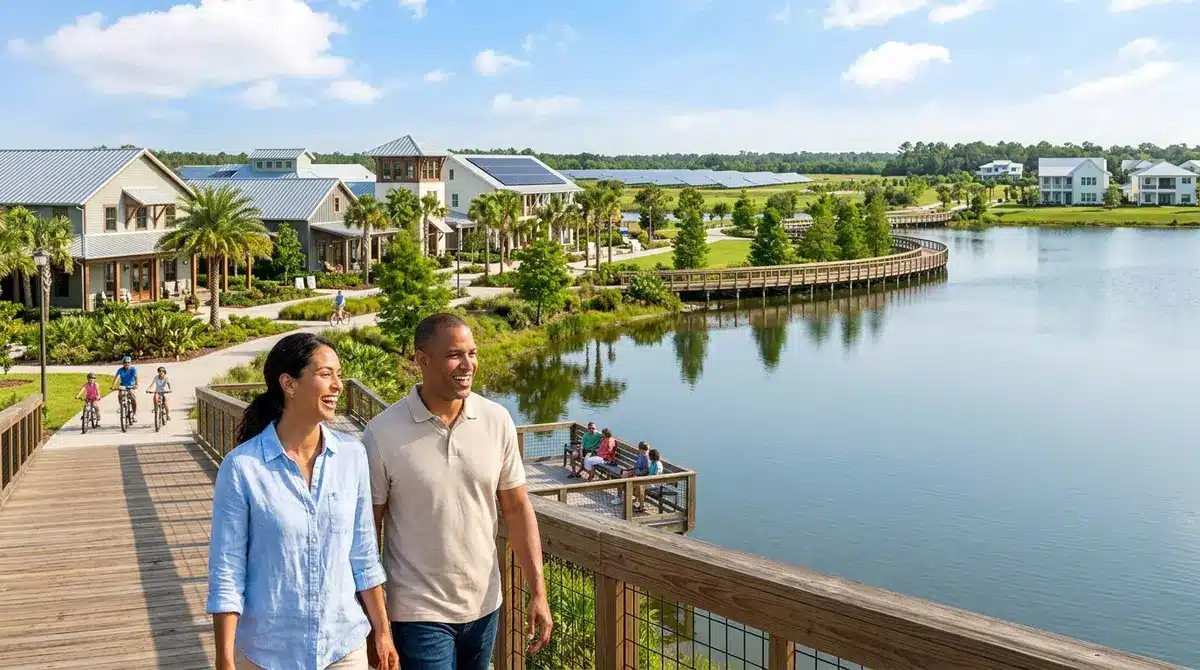

Over 80% of Babcock Ranch’s residential projects in 2023 involved pooled investor funds, showcasing how collaborative strategies shape this solar-powered community. This model lets individuals access large-scale developments without handling mortgages or maintenance. Imagine owning a stake in eco-friendly neighborhoods or commercial hubs while experts manage the heavy lifting.
Babcock Ranch isn’t just Florida’s first solar-powered town—it’s a hotspot for innovative wealth-building approaches. Here, syndication merges sustainability with financial growth. Groups combine resources to acquire properties, from mixed-use spaces to energy-efficient housing. You gain exposure to assets typically reserved for institutional buyers.
Why focus on this location? The area’s master-planned infrastructure attracts forward-thinking sponsors and reliable tenants. Its growth trajectory—ranked among Southwest Florida’s fastest-expanding communities—creates stability for long-term ventures. Unlike solo investments, syndicated deals here spread risk while amplifying potential returns.
Key Takeaways
- Pooled funding models let you join high-value projects with lower capital requirements
- Syndicators handle property research, negotiations, and management tasks
- Babcock Ranch’s eco-focused development attracts stable tenants and premium valuations
- Diversification occurs naturally through shared ownership of multiple asset types
- Passive income streams form without direct involvement in daily operations
Overview of Real Estate Syndication in Babcock Ranch, FL
Babcock Ranch’s growth as America’s first solar-powered town stems from innovative funding strategies reshaping property ownership. Collaborative models allow groups to acquire assets like commercial hubs or eco-friendly housing—opportunities often inaccessible to solo participants. This approach combines expertise with pooled resources, letting you benefit from large-scale ventures without hands-on management.

How Collaborative Funding Creates Opportunity
Think of syndication as a specialized crowdfunding method for properties. Experienced operators source deals, while passive contributors share profits proportionally. You gain exposure to curated projects—from retail centers to renewable energy sites—selected for their growth potential in this planned community.
Why Location Matters Here
Babcock Ranch’s 18,000-acre master plan integrates residential, commercial, and green spaces. Population growth exceeds state averages, with 6,000+ new residents projected by 2025. Infrastructure like solar farms and smart grids attracts tenants valuing sustainability, creating stable cash flow for shared ventures.
Local economic drivers—including tech firms and eco-tourism—boost demand for mixed-use spaces. This diversification reduces reliance on single industries, making real estate investment in Babcock Ranch less volatile than traditional markets. Your stake benefits from professional oversight and built-in tenant appeal.
What is Real Estate Syndication
Collaborative property ventures enable groups to acquire high-value assets through pooled resources. This approach lets participants share ownership without individual management burdens. By combining funds, you gain access to projects requiring significant capital—like new developments or eco-conscious communities.

Breaking Down the Partnership Model
In these arrangements, experienced operators (sponsors) source opportunities and manage daily operations. Contributors (investors) provide funding while maintaining passive roles. Profits distribute based on initial contributions and agreed terms.
Key Responsibilities in Joint Ventures
Sponsors handle due diligence, property acquisition, and oversight. They assume liability for project execution. Investors benefit from potential returns without operational tasks—ideal for those seeking portfolio diversification.
The JOBS Act expanded participation by allowing sponsors to connect with accredited contributors through streamlined channels. Qualification typically involves $200k+ annual income or $1M+ net worth. This framework transforms how groups engage in large-scale developments, particularly in planned communities prioritizing sustainability.
Exploring the Benefits of Real Estate Syndication
By combining capital, participants tap into ventures previously beyond solo reach. This approach reshapes how portfolios grow through shared ownership models. Instead of facing market uncertainties alone, you join forces with experienced operators and fellow contributors.

Diversification and Risk Reduction
Spreading capital across multiple assets softens the impact of market shifts. Imagine owning slices of commercial spaces, rental communities, and renewable energy sites simultaneously. Geographic diversity further insulates your stake from local economic downturns.
Shared ventures minimize exposure to vacancies or maintenance costs tied to single properties. Professional teams handle tenant relations and repairs, reducing your direct liabilities. Historical data shows diversified holdings often outperform concentrated bets during volatility.
Access to Larger Investment Opportunities
Pooled resources unlock projects requiring seven-figure commitments. You might own part of a mixed-use complex or solar-powered housing development. These assets typically offer stronger cash flow than smaller residential units.
Group funding also secures better loan terms and management expertise. Operators negotiate bulk pricing for renovations or tech upgrades, boosting returns. While outcomes vary, structured deals in growth areas like Babcock Ranch provide pathways to investment opportunities.
How Real Estate Syndication Works
Pooling resources transforms how groups engage with high-value assets. Experienced sponsors lead the charge, combining expertise with investor capital to unlock projects most individuals couldn’t tackle alone. This method follows a structured path from opportunity identification to deal closure.
Step-by-Step Process
Sponsors first identify properties matching strict profitability criteria. They analyze market trends, tenant demand, and growth potential. Once a target is selected, legal and financial experts join to structure the venture.
Key stages include:
- Forming a syndicate team with attorneys and CPAs
- Securing financing through equity commitments
- Negotiating purchase terms with property sellers
Legal Documentation Essentials
Private Placement Memorandums (PPMs) serve as the venture’s blueprint. These documents outline projected returns, risks, and management roles. Sponsors distribute PPMs to qualified participants, who review terms before signing subscription agreements.
Final steps involve:
- Collecting investor funds into escrow
- Executing partnership operating agreements
- Transferring ownership through regulated closing procedures
This framework ensures transparency while protecting all parties’ interests. You gain exposure to curated deals without handling complex logistics.
Assessing Investment Opportunities in Babcock Ranch
Babcock Ranch’s planned expansion includes 19,500 homes and 6 million square feet of commercial space by 2040, creating layered prospects for capital deployment. Understanding this ecosystem requires analyzing both community-driven values and measurable growth indicators.
Local Market Insights and Trends
Population here grows 15% faster than Florida’s average, driven by families and remote workers seeking sustainable living. Three factors shape demand:
- Tech employment hubs attracting 25-44 year-olds
- Retirees prioritizing walkability and healthcare access
- Tourism revenue from eco-conscious visitors
Solar-powered infrastructure reduces utility costs by 40% compared to neighboring towns. This attracts tenants willing to pay premium rents for green-certified spaces. Commercial leases here average 98% occupancy since 2022.
Evaluating Potential Properties
Focus on assets within half-mile radiuses of these hotspots:
- Founders Square’s retail and dining cluster
- Linear Park’s recreational trails
- Future light rail stations
Review architectural plans aligning with the community’s net-zero energy goals. Properties incorporating smart home technology see 22% faster lease-ups. Always cross-check tenant profiles against census data showing median household incomes exceeding $85k.
External factors like Charlotte County’s tax incentives for solar installations further boost returns. Partner with operators who track regional infrastructure projects affecting asset valuations.
Implementing Due Diligence in Syndication
Successful investors know thorough research separates profitable deals from pitfalls. Start by scrutinizing every document syndicators provide—offering memorandums, financial statements, and partnership agreements. Cross-verify these with third-party market reports and legal filings.
Researching Market and Property Data
Dig into the sponsor’s track record. How many projects have they completed? What’s their average return? Visit properties personally or hire inspectors. Compare rental rates and occupancy trends against nearby developments.
Review environmental assessments and zoning laws. Check if projected tenant demand aligns with census data. Look for red flags like outdated infrastructure or pending regulatory changes.
Ensuring Thorough Risk Assessment
Identify potential pitfalls in cash flow projections. Are vacancy rates realistic for the area? Test financial models against worst-case scenarios—like interest rate hikes or economic downturns.
Engage real estate attorney to review contracts. Accountants can spot inconsistencies in pro forma statements. This layered approach minimizes surprises, letting you commit capital with confidence.
Structuring and Managing Syndication Deals
Successful collaborative ventures rely on clear frameworks that protect contributors while maximizing returns. Choosing the right legal structure forms the foundation—most deals use LLCs or partnerships to balance liability protection with tax advantages.
Establishing Legal Frameworks and Agreements
LLCs work best for short-term projects like renovations. They shield members from personal liability while allowing profit distributions through operating agreements. Partnerships suit long-term rentals, offering flexibility in profit splits between sponsors and contributors.
Key documents include:
- Operating agreements defining voting rights
- Subscription packets outlining capital commitments
- Profit waterfall schedules for returns distribution
- real estate accounting protocols for transparency
Defining Roles and Responsibilities
Sponsors handle property acquisition and oversee renovations. They earn 1-2% of the purchase price as acquisition fees. Contributors fund deals passively, receiving monthly or quarterly updates.
Performance fees (typically 20% of profits) align interests after hitting return targets. Third-party managers handle rental maintenance and repairs, freeing partners from day-to-day tasks. Regular audits ensure transparency across all operations.
Recognizing Risks and Challenges in Syndication Investments
While syndicated ventures offer growth potential, 5% of historical deals resulted in total losses—a reminder that risk awareness defines smart participation. Balancing rewards with realistic assessments helps avoid costly missteps.
Common Pitfalls to Avoid
Your capital could remain locked for 3-7 years with limited exit options. Economic downturns or rising interest rates might slash property values, impacting cash flow. Single-asset dependence magnifies exposure—one failed project affects your entire stake.
Operational hiccups like construction delays or maintenance surprises drain profits. Inexperienced sponsors might misjudge timelines or tenant demand. Even strong markets face zoning regulations shifts altering project viability.
Data reveals variability: 115 deals averaged 17.7% returns, but six caused 100% losses. Mitigate risks by vetting sponsors’ track records and diversifying across asset types. Legal reviews and stress-testing financial models add protection layers.
Success demands matching patience with due diligence. Understand every contract clause before committing funds. Pair this knowledge with how to build a real estate portfolio effectively to navigate challenges.