

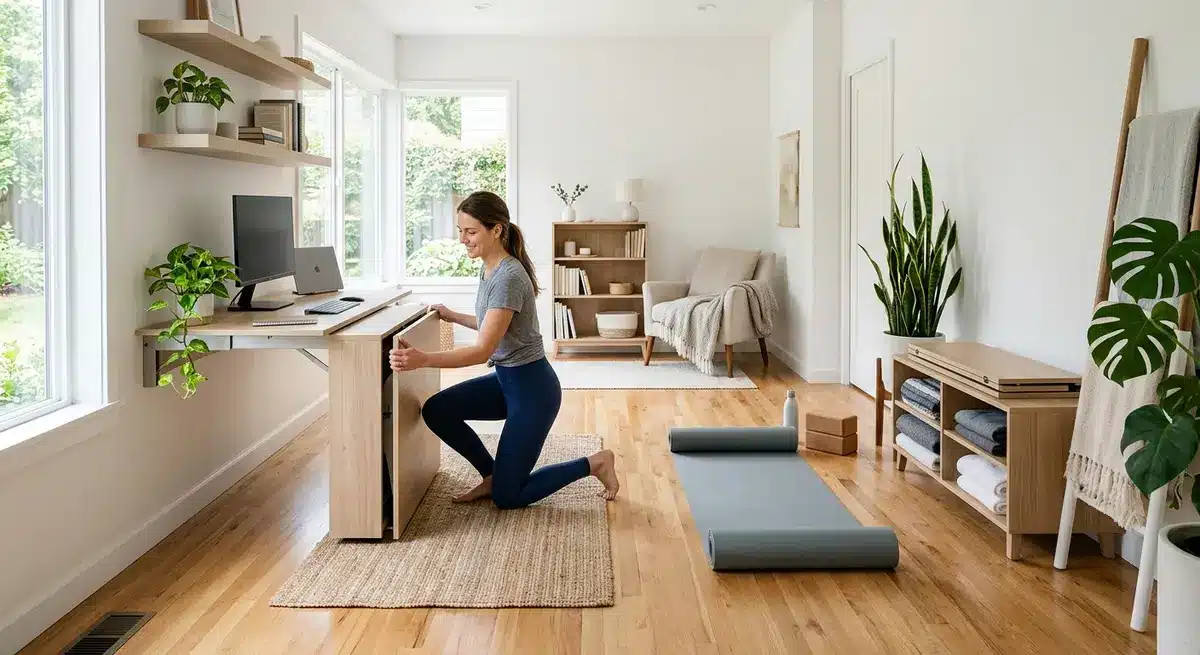
A flex room is a versatile, multi-purpose space within a residential floor plan designed to adapt to a homeowner’s changing lifestyle needs. Unlike traditional bedrooms or formal dining rooms that serve a single, fixed function, these dynamic areas can seamlessly transition from a remote workspace to a fitness studio, multi-generational guest suite, or children’s playroom as family dynamics evolve. By integrating adaptable architecture, homeowners can future-proof their properties without the need for expensive structural renovations.
Key Takeaways
- Adaptability: Flex spaces are designed to evolve, easily transitioning between home offices, gyms, and guest suites.
- Property Value: Homes with designated flexible spaces see an average 15% premium in the 2026 real estate market.
- Structural Differences: Unlike bonus rooms, flex spaces are typically located on the main floor and feature standard ceiling heights and egress windows.
- Cost Efficiency: Modifying a versatile room is significantly cheaper than building a home addition when lifestyle needs change.
- Modern Demand: Over 78% of new construction buyers now prioritize adaptable floor plans over traditional, rigid layouts.
The Evolution of the Flexible Living Space in 2026
The concept of residential adaptability has undergone a massive transformation over the past decade. Historically, houses were compartmentalized into strict zones: a room for dining, a room for sleeping, and a room for formal entertaining. However, modern living demands fluidity. According to the American Institute of Architects (AIA) 2026 Home Design Trends Survey, 78% of new homebuyers explicitly prioritize adaptable floor plans.
This shift is largely driven by the permanent establishment of hybrid work models. With the Bureau of Labor Statistics reporting that 42% of the workforce operates remotely at least two days a week, the need for a dedicated, yet convertible, workspace is paramount. Homeowners are no longer satisfied with setting up a laptop on the kitchen island; they require acoustically sound, well-lit environments that can revert to personal use after 5:00 PM.
“The modern home is no longer a static environment,” explains Dr. Sarah Jenkins, Director of Architectural Sociology at the Urban Design Institute. “By integrating transitional zones, homeowners future-proof their properties against unpredictable lifestyle shifts, ensuring the building serves the occupants, rather than the occupants conforming to the building.”
Defining Characteristics: What Makes a Room “Flexible”?
To truly understand the meaning of a flexible room, one must look at its architectural DNA. A true adaptable space is intentionally designed to be a blank canvas. It avoids hyper-specific built-ins that dictate its use.
Key technical features usually include:
- Strategic Location: Often situated near the front entrance or just off the main living corridor, allowing it to serve as a public-facing office or a private retreat.
- Egress Compliance: To legally function as a bedroom if needed, the space must feature proper egress windows and a closet, adhering to local building codes.
- Acoustic Dampening: High-quality insulation in the interior walls to prevent sound transfer, which is critical for home offices or media rooms.
- HVAC Zoning: Independent climate control, allowing the room to be cooled heavily during a workout or kept warm when used as a nursery.
Popular Ways to Utilize a Flex Room
The beauty of an adaptable layout is its limitless potential. Depending on your current life stage, the space can serve entirely different purposes.
The Dedicated Home Office
In 2026, the home office is the most common application. A well-designed workspace requires more than just a desk; it needs layered lighting, ample electrical outlets with USB-C integration, and a neutral background for video conferencing. Many homeowners utilize modular casework that can be easily removed if the room needs to be repurposed.
Multi-Generational Guest Suites
With multi-generational living on the rise, having a main-floor room that can accommodate aging parents or returning adult children is invaluable. By incorporating a Murphy bed or a high-end sleeper sofa, the room functions as a daily living space that instantly converts into a comfortable bedroom for overnight guests.
Wellness and Fitness Studios
Health-conscious homeowners frequently dedicate these areas to physical and mental well-being. From Peloton bikes and free weights to yoga mats and meditation cushions, a private wellness studio is a highly sought-after amenity. Durable, shock-absorbing flooring and mirrored walls are common upgrades in these setups.
Flex Room vs. Bonus Room: Understanding the Difference
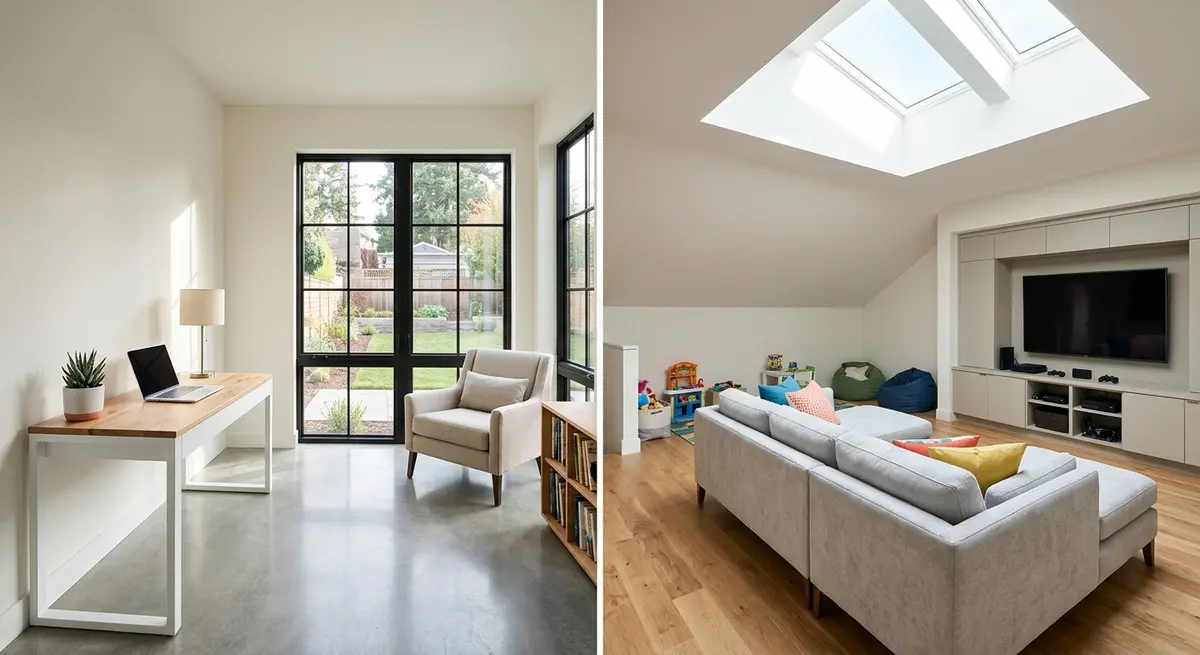
While often used interchangeably in real estate listings, there is a distinct architectural difference between a flex room and a bonus room. According to Wikipedia’s architectural definitions, a bonus room is typically an irregular space created by the roofline, often found above a garage.
| Feature | Flex Room | Bonus Room |
|---|---|---|
| Location | Main floor, integrated into the primary layout | Upper level, often above a garage or in an attic |
| Ceiling Height | Standard or vaulted (8-10+ feet) | Often features sloped or irregular ceilings |
| Egress & Closets | Usually includes a closet and egress window | Rarely includes a closet; egress can be challenging |
| Primary Use | Office, guest suite, formal dining, gym | Media room, teen hangout, storage |
How to Design and Transition Your Space (Step-by-Step)
Adapting your home to fit your current needs doesn’t require a general contractor. Follow these steps to efficiently transition your space:
- Assess Structural and Electrical Needs: Before moving furniture, evaluate the room’s infrastructure. If you are building a home office, ensure you have dedicated circuits to prevent overloading. The U.S. Department of Energy recommends evaluating your HVAC zoning to ensure the room maintains comfortable temperatures based on its new use.
- Implement Acoustic Solutions: If the room is transitioning into a media center or office, add heavy drapery, acoustic wall panels, or thick area rugs to minimize sound reverberation.
- Choose Modular Furniture: Invest in multi-functional pieces. A stylish credenza that hides a printer, or a storage ottoman that holds workout gear, keeps the room looking intentional rather than cluttered.
- Optimize Lighting: Swap out standard builder-grade fixtures for smart lighting systems. Use bright, cool-toned lights for productivity and warm, dimmable lights for relaxation or guest use.
- Establish Visual Boundaries: If the room must serve dual purposes (e.g., an office and a gym), use area rugs or open shelving to create distinct zones within the single room.
The Financial Value of Adaptable Floor Plans
Beyond daily convenience, there is a strong financial incentive for prioritizing adaptable architecture. Real estate data from the National Association of Realtors (NAR) indicates that properties marketed with a “dedicated flex space” sell 22% faster than those with rigid, traditional layouts.
Marcus Thorne, a certified residential appraiser, notes: “When we evaluate a property in 2026, functional utility is a massive driver of value. A room that can legally be classified as a fourth bedroom but is currently staged as a high-end office adds significant appraisal value. Buyers are willing to pay a 10% to 15% premium for that built-in versatility.”
This financial benefit is especially evident in master-planned developments where buyers are looking for long-term residences. Understanding the ultimate guide to adaptability helps buyers make informed investment decisions when selecting a floor plan.
Flex Spaces in Modern Master-Planned Communities
In innovative, forward-thinking towns, the integration of adaptable architecture is a standard feature rather than an afterthought. Builders in sustainable developments understand that residents want homes that grow with them. For instance, when exploring how these rooms work in new builds, you’ll find that developers are prioritizing non-load-bearing partition walls and pre-wired tech hubs.
This architectural foresight aligns perfectly with the broader goals of sustainable living. In communities focused on resilience and green energy, the ability to work, exercise, and entertain at home reduces the carbon footprint associated with commuting. It is a core component of the solar city lifestyle, where energy efficiency and spatial efficiency go hand-in-hand.
Furthermore, as buyers evaluate the financial case for sustainable real estate, the presence of a versatile room acts as a hedge against future housing market fluctuations. Whether you are sheltering in place during a storm in hurricane-proof community designs or simply hosting family for the holidays, the adaptable room is the ultimate residential asset.
Frequently Asked Questions (FAQ)
Does a flex room count as a bedroom?
It can, provided it meets local building codes. Typically, to be legally classified as a bedroom, the room must have a minimum square footage, a built-in closet, and an egress window that allows for emergency escape.
What is the best flooring for a versatile room?
Luxury Vinyl Plank (LVP) or engineered hardwood are the best choices. They provide a professional look for an office, are durable enough for light gym equipment, and are easy to clean if the room is used as a playroom.
How much does it cost to convert a standard room into a flex space?
Costs vary widely based on the intended use. A simple cosmetic conversion (paint, lighting, modular furniture) may cost between $1,000 and $3,000. Adding custom built-ins, Murphy beds, or upgrading electrical panels can push the budget to $5,000 – $10,000.
Can I add a bathroom to my flex space?
If the room shares a wall with existing plumbing (like a kitchen or another bathroom), adding an en-suite is highly feasible and significantly increases the room’s utility as a guest suite. However, if plumbing lines need to be trenched through a concrete slab, costs will be substantial.
Why are builders moving away from formal living rooms?
Consumer preferences have shifted. Modern families prefer open-concept great rooms for daily living and entertaining, rendering the formal, isolated living room obsolete. Builders have replaced these areas with adaptable spaces that offer practical, everyday utility.
How do I make a flex room feel cohesive with the rest of the house?
Maintain consistent flooring and trim work. Even if the room serves a unique purpose, using the same baseboards, door casings, and a complementary color palette ensures the space feels like an intentional part of the home’s architecture.
Conclusion
Understanding what a flex room is and how to maximize its potential is crucial for modern homeowners. As we navigate 2026, the demand for adaptable, multi-functional living spaces continues to skyrocket. Whether you need a quiet sanctuary for remote work, a private fitness studio, or a welcoming suite for aging parents, these dynamic rooms provide the ultimate solution for a changing lifestyle. By investing in versatile architecture, you not only improve your daily quality of life but also significantly boost your property’s long-term market value.
If you are looking to explore modern floor plans that perfectly balance sustainability, resilience, and adaptable design, we are here to help you find the perfect fit for your family’s future. Contact us today to learn more about innovative home designs and community living.