
Key Takeaways
- Market Dynamics: The 2026 real estate landscape heavily favors buyers who are pre-approved for specialized sustainable community lending.
- Fee Structures: Understanding the difference between standard HOA dues and CDD (Community Development District) assessments is critical for budgeting.
- Construction Options: Buyers must weigh the 8-to-14-month timeline of custom builds against the immediate availability of resale properties.
- Resilience Standards: Every residence is engineered to withstand Category 5 hurricanes, impacting both insurance premiums and inspection requirements.
- Solar Integration: Properties are powered by an 870-acre solar facility, requiring specific knowledge of utility billing and net metering.
Understanding the 2026 Real Estate Market in the Solar Town
Acquiring real estate in this innovative Southwest Florida community is vastly different from buying in a traditional subdivision. As the town expands into its newer phases in 2026, the market has matured, offering a diverse portfolio of housing options ranging from attached villas to sprawling custom estates.
According to recent data from Florida Realtors, master-planned communities with integrated renewable energy have seen a 22% increase in buyer demand over the past three years. This surge is driven by a growing desire for energy independence and climate resilience. The median purchase price in the community currently hovers around $550,000, though this fluctuates significantly based on the neighborhood and builder.
“The 2026 market demands buyers be pre-approved specifically for properties carrying CDD assessments,” notes Marcus Thorne, Chief Economist at the Southwest Florida Real Estate Board. “Lenders are scrutinizing debt-to-income ratios more closely when these infrastructural taxes are factored into the monthly payment.”
For those exploring available properties, it is essential to recognize that inventory moves quickly. The combination of gigabit internet, autonomous transportation testing, and extensive nature trails creates a highly competitive environment for prospective residents.
Step 1: Determine Your Ideal Neighborhood and Builder
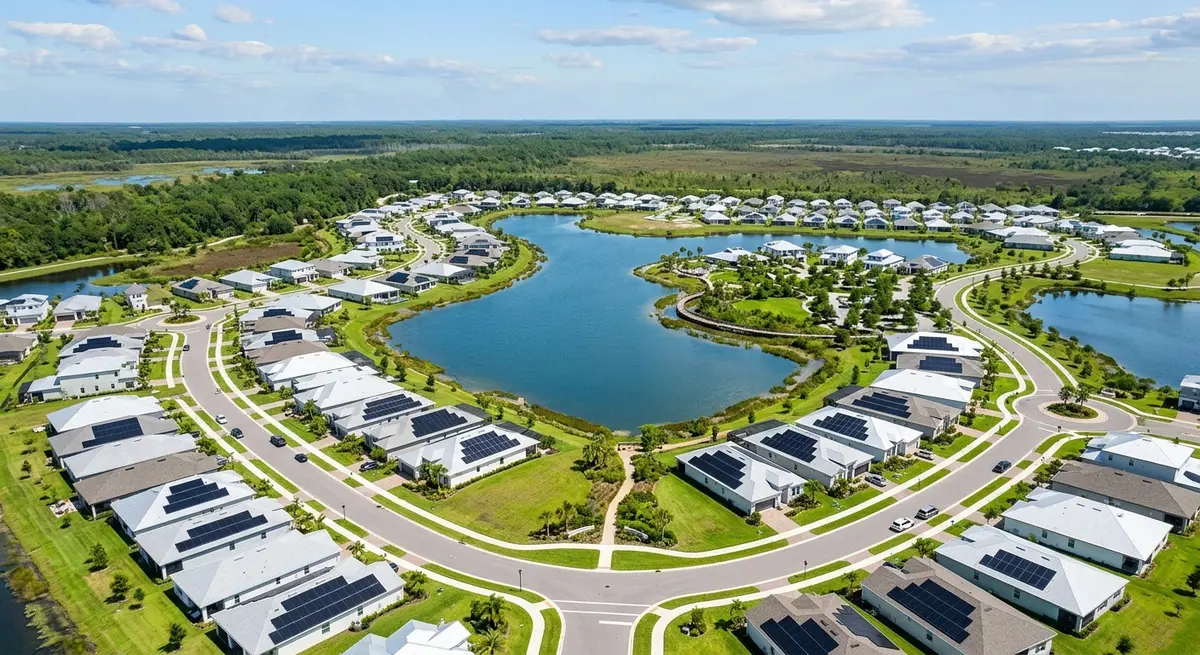
The community is divided into distinct neighborhoods, each curated by specific builders and catering to different lifestyle needs. Some enclaves focus on maintenance-free living for retirees, while others are designed with large single-family footprints ideal for growing families.
When selecting a neighborhood, consider your proximity to key amenities. For instance, families often prioritize being within walking or golf-cart distance to the educational facilities or the downtown district amenities. Conversely, buyers seeking tranquility might prefer the neighborhoods bordering the 91,000-acre state preserve.
Builders in the community range from large national brands to specialized custom luxury developers. Each builder has exclusive rights to specific lots and offers distinct floor plans. It is crucial to interview multiple builders to understand their standard inclusions versus premium upgrades. Many modern floor plans now focus heavily on incorporating adaptable flex spaces to accommodate remote work and multi-generational living.
Step 2: Navigating New Construction vs. Resale Properties
One of the most significant decisions in the acquisition process is choosing between a brand-new build and an existing resale property. Both paths offer distinct advantages and challenges in the current market.
New construction allows for complete personalization, from structural options to interior finishes. However, buyers must be prepared for construction timelines that typically span 8 to 14 months, depending on supply chain variables and permitting. Alternatively, purchasing a resale property offers a rapid 30-to-60-day closing timeline and the benefit of mature landscaping.
| Feature | New Construction | Resale Property |
|---|---|---|
| Customization | High (Choose lot, floorplan, finishes) | Low (What you see is what you get) |
| Move-In Timeline | 8 to 14 Months | 30 to 60 Days |
| Energy Standards | Latest 2026 Efficiency Codes | 2018-2025 Efficiency Codes |
| Landscaping | Immature / Newly Planted | Established / Mature |
“Navigating the builder contracts in a master-planned sustainable community requires understanding how solar infrastructure is deeded,” says Sarah Jenkins, Senior Real Estate Analyst at the Florida Housing Institute. Buyers must verify whether solar panels on resale homes are owned outright or leased, as this directly impacts the transfer of the property.
Step 3: Financing and Specialized Insurance Considerations
Securing financing for a highly engineered, sustainable property requires a lender who understands the nuances of the community. While traditional Conventional, FHA, and VA loans are widely used, the appraisal process must account for the premium associated with hurricane resilience and solar integration.
Research from the U.S. Department of Energy indicates that homes with robust energy-efficient certifications appraise for up to 4.1% more than standard comparable properties. Lenders familiar with the area will appropriately value the impact-resistant windows, elevated foundations, and advanced insulation techniques.
Insurance is another critical factor. Because the entire infrastructure is built to withstand severe weather, residents often benefit from reduced homeowners’ insurance premiums. The community’s strategic elevation and advanced stormwater management systems keep the residential zones out of high-risk flood areas, often eliminating the federal mandate for flood insurance, though many experts still recommend it.

Step 4: Understanding Community Fees (HOA and CDD)
A vital component of the acquisition process is budgeting for the recurring community fees. Unlike standard subdivisions, this town utilizes a Community Development District (CDD) to fund its massive upfront infrastructure costs, including the water management systems, utility grids, and public parks.
The CDD is a non-ad valorem tax included in your annual county property tax bill. It is amortized over 30 years. When evaluating the advantages and drawbacks of relocating here, buyers must calculate both the CDD assessment and the standard Homeowners Association (HOA) dues.
HOA fees cover the maintenance of neighborhood-specific amenities, landscaping, and community lifestyle programming. Depending on the neighborhood, HOA fees can range from $150 to over $400 per month. Buyers should request a comprehensive breakdown of these fees during the due diligence period to ensure long-term affordability.
Step 5: The Closing Process and Moving In
The final stages of acquiring your new residence involve specialized inspections and utility transfers. Because of the advanced technology integrated into these properties, standard home inspections are not sufficient.
- Conduct a Specialized Inspection: Hire an inspector certified in renewable energy systems and hurricane mitigation. They must evaluate the roof tie-downs, impact glass seals, and the health of the solar inverter.
- Review the Ownership Structure: Understand the community ownership structure and how it dictates future development and land use around your specific lot.
- Finalize Insurance Policies: Secure your hazard and windstorm policies, ensuring the agent applies all eligible mitigation discounts based on the home’s engineering.
- Transfer Utilities: Set up your accounts with the local solar-powered utility provider and the community’s exclusive gigabit fiber-optic internet service.
- Complete the Walkthrough: For new construction, this is your final opportunity to identify cosmetic defects or incomplete builder obligations before signing the closing disclosure.
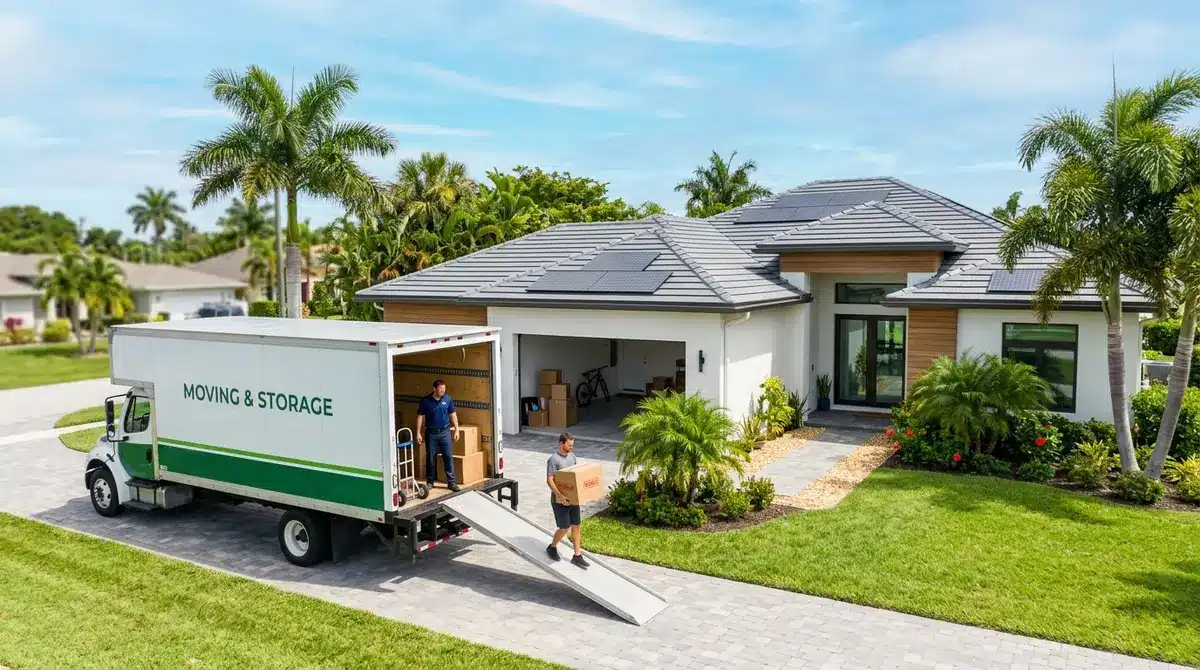
Once the paperwork is signed and funded, you receive the keys to a residence that represents the future of urban planning. The transition into the community is typically seamless, aided by welcome committees and neighborhood ambassadors.
Why Buyers Are Flocking to America’s First Solar Town
The decision to invest in this specific geographic location goes beyond standard real estate metrics. It is a lifestyle choice centered on sustainability, health, and technological integration. The town’s 150-megawatt solar facility ensures that the community generates more clean energy than it consumes.
“Resilience is the new luxury. Buyers aren’t just paying for square footage; they are investing in uninterrupted power and structural security,” explains Dr. Elena Rostova, Director of Urban Resilience at the University of Florida. This sentiment was proven accurate during recent hurricane seasons, where the community maintained power and suffered minimal damage while surrounding counties faced catastrophic losses.
Furthermore, the master plan includes commercial integration that enhances daily life. Residents enjoy convenient grocery access, medical facilities, and diverse dining options without ever needing to leave the town’s borders. This self-sustaining ecosystem is a primary driver for the sustained property value appreciation seen throughout 2026.
Frequently Asked Questions (FAQ)
Do I need special insurance for a solar-powered home?
Standard homeowners insurance covers solar-powered homes, but you must ensure your policy limits are high enough to cover the replacement cost of the advanced technology and impact-resistant materials. Many providers offer discounts for the hurricane mitigation features built into these properties.
What exactly is a CDD fee?
A Community Development District (CDD) fee is a specialized tax assessment used to pay for the community’s major infrastructure, such as roads, water systems, and parks. It is collected annually alongside your standard county property taxes.
Can I choose any builder I want?
No, the community operates with a select group of approved builders who have purchased specific lots. You must choose from the designated builders operating within the specific neighborhood you wish to live in.
Are solar panels physically installed on every house?
While the entire town is powered by a massive central solar array, individual rooftop solar panels are optional for most neighborhoods. Some specific eco-focused enclaves do mandate rooftop panels, but the majority rely on the community’s shared grid.
How long does it take to build a new house here?
In the 2026 market, building a new custom or semi-custom property typically takes between 8 and 14 months. This timeline depends heavily on the builder’s backlog, the complexity of the floor plan, and local permitting speeds.
Is flood insurance required?
Because the community was strategically built at a higher elevation and features an advanced stormwater management system, most residential lots are not in high-risk flood zones. Therefore, federal lenders typically do not mandate flood insurance, though FEMA and local experts still strongly recommend it.
Conclusion
Successfully acquiring property in this pioneering sustainable community requires a strategic approach. By understanding the nuances of CDD fees, evaluating the pros and cons of new construction versus resale, and securing specialized financing, buyers can confidently navigate the 2026 market. The investment yields more than just a physical structure; it provides entry into a resilient, forward-thinking lifestyle designed to withstand the challenges of tomorrow.
If you are ready to begin your journey toward sustainable living and need expert guidance navigating builders, neighborhoods, and contracts, contact our real estate team today for a personalized consultation.