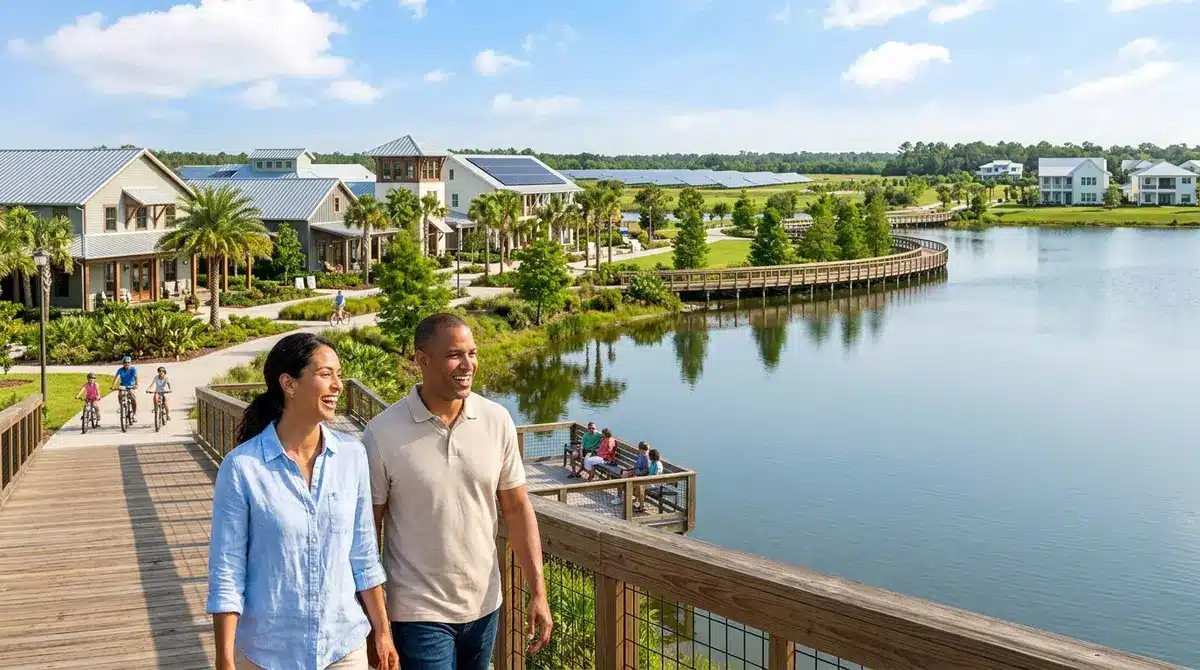

Achieving a hurricane-proof property in Florida requires a combination of elevated topography, aerodynamic structural engineering, impact-resistant glazing, and subterranean utility infrastructure. Rather than merely surviving a storm, modern resilient communities are designed to maintain power, manage extreme rainfall, and prevent structural failure against Category 4 and 5 winds. By integrating continuous load path construction with master-planned water management, today’s developments ensure residents experience minimal disruption even during severe weather events.
Key Takeaways
- Structural Integrity: Modern 2026 building codes require homes in coastal and high-risk zones to withstand wind speeds exceeding 160 mph through continuous load path engineering.
- Subterranean Infrastructure: Burying power and utility lines underground reduces storm-related power outages by up to 90%.
- Water Management: Master-planned communities utilize natural topography, retention lakes, and native landscaping to absorb 500-year storm rainfalls without flooding streets or homes.
- Energy Independence: Solar microgrids and battery storage systems ensure critical infrastructure remains operational when the traditional power grid fails.
- Financial Benefits: Investing in resilient construction yields up to a 30% reduction in homeowners insurance premiums and a 15% increase in property resale value.
- Elevation is Crucial: Building on land situated 25 to 30 feet above sea level provides a natural defense against storm surges and localized flooding.
The Evolution of Florida’s Hurricane-Resilient Infrastructure
The concept of storm resilience has transformed dramatically over the past three decades. Following the devastation of Hurricane Andrew, the implementation of the 2002 Florida Building Code set a new national standard for structural integrity. However, as we navigate the climate realities of 2026, the focus has shifted from individual home survival to comprehensive community resilience. According to the Federal Emergency Management Agency (FEMA), communities that adopt advanced building codes save $11 in disaster recovery costs for every $1 invested in mitigation.
Today’s engineering standards go far beyond plywood and storm shutters. Developers are now looking at the macro-environment, analyzing how entire neighborhoods interact with extreme wind and water. “The paradigm has shifted from recovery to proactive resilience. We no longer build to survive the storm; we build to function through it,” explains Dr. Sarah Jenkins, Structural Engineering Director at the Florida Resilience Institute. This proactive approach means that a hurricane-proof city in Florida is no longer a theoretical concept, but a tangible reality driven by data, engineering, and innovative urban planning.
Modern developments utilize advanced topographical mapping to ensure natural water flow is preserved and enhanced. By the time a tropical cyclone makes landfall, these communities have already deployed passive defense mechanisms that require zero human intervention. From reinforced concrete block construction to aerodynamic roof pitches, the architecture itself becomes a shield against the elements.
Core Engineering Principles of a Storm-Resistant Home
To truly understand how a property withstands a major cyclone, one must look behind the drywall. The anatomy of a resilient home relies on interconnected systems that distribute extreme forces safely into the ground.
Aerodynamic Roof Designs and Tie-Downs
The roof is typically the most vulnerable component of a house during a high-wind event. In 2026, architectural standards dictate the use of hip roofs, which slope downward on all sides, offering significantly less wind resistance than traditional gable roofs. Research from the University of Florida’s Wind Hazard Damage Assessment Group shows that hip roofs experience 40% less uplift pressure during 150 mph winds.
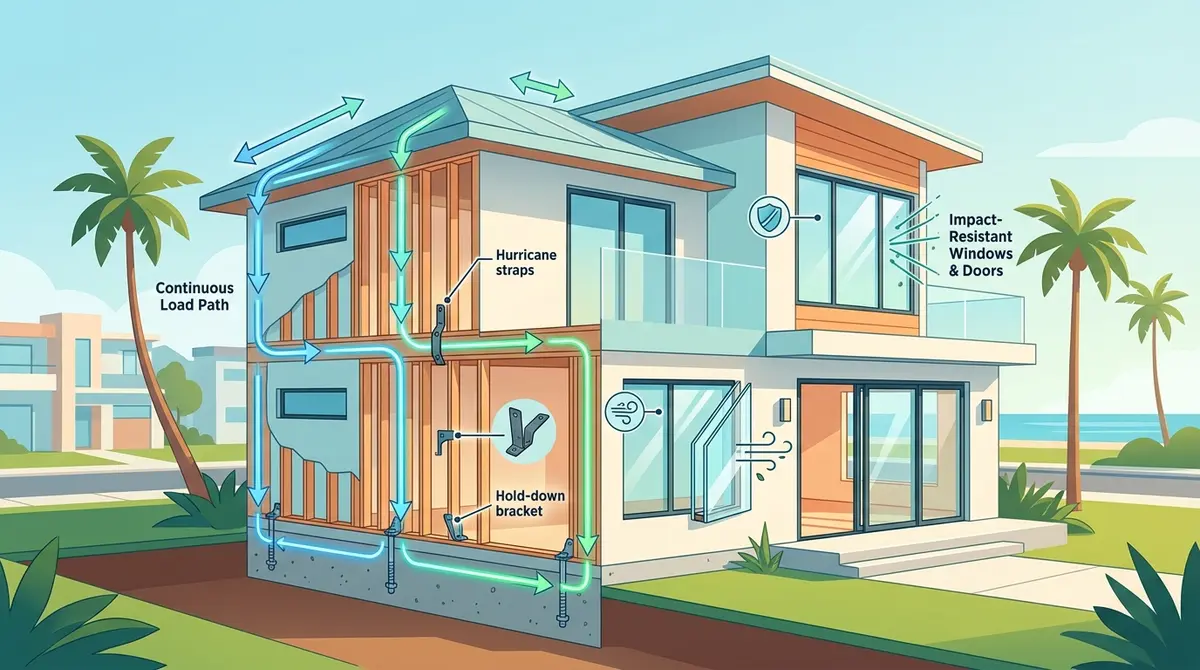
Furthermore, the implementation of a continuous load path is non-negotiable. This engineering technique uses heavy-duty metal straps and hurricane ties to connect the roof trusses directly to the structural walls, which are in turn anchored deeply into the concrete foundation. This ensures that the entire house acts as a single, unified block of mass, capable of resisting catastrophic uplift forces.
Impact-Resistant Glazing and Envelope Integrity
Maintaining the building envelope—the physical separator between the conditioned and unconditioned environment—is critical. If a window shatters during a storm, the sudden influx of wind creates massive internal pressurization, which can literally blow the roof off a home. To combat this, modern resilient homes utilize impact-resistant glazing.
These specialized windows feature a layer of polyvinyl butyral (PVB) sandwiched between two sheets of tempered glass. Even if the outer glass cracks from flying debris, the PVB layer holds the window intact, preventing wind and water intrusion. A 2026 study by the National Institute of Building Sciences reveals that homes equipped with full impact-resistant envelopes suffer 85% less interior damage during Category 4 hurricanes.
Beyond the House: Master-Planned Resilience
While individual home construction is vital, true safety is found in the community’s overarching design. A single fortified house is of little use if the surrounding streets are flooded and the power is out for weeks. This is why the concept of a hurricane-proof community focuses heavily on shared infrastructure.
“Underground utilities and integrated water management systems are non-negotiable for modern master-planned developments in 2026,” notes Marcus Thorne, Chief Urban Planner at the Coastal Development Consortium. By burying electrical, internet, and water lines, communities eliminate the risk of downed poles and severed connections. Statistics indicate that neighborhoods with subterranean infrastructure experience 90% fewer power outages during severe weather events.
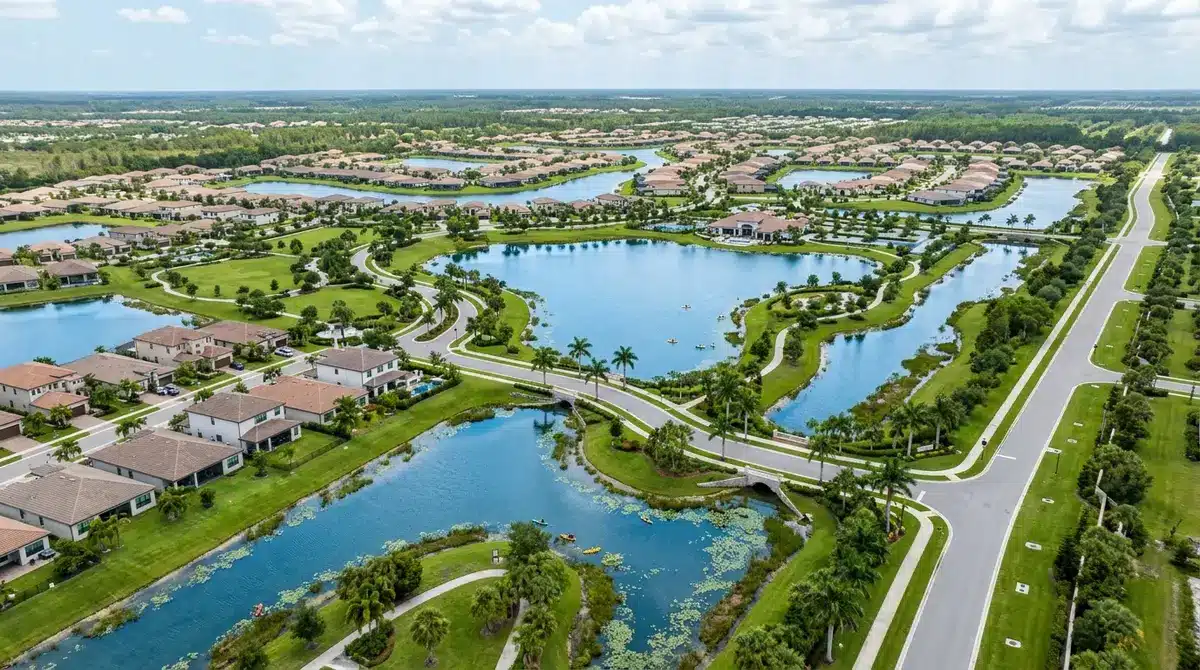
Water management is equally critical. Instead of relying solely on artificial storm drains, resilient towns utilize the natural landscape. Expansive networks of retention lakes, interconnected wetlands, and permeable paving materials are engineered to absorb and slowly filter massive amounts of rainfall. By building residential lots at a minimum 30-foot elevation above sea level, developers ensure that even during a 500-year storm event, the water remains in the lakes and off the streets.
Comparing Traditional vs. Resilient Community Standards
To illustrate the stark differences between older coastal developments and modern resilient towns, consider the following comparison of infrastructure standards in 2026:
| Infrastructure Feature | Traditional Florida Neighborhoods | 2026 Resilient Master-Planned Communities |
|---|---|---|
| Power Grid | Above-ground poles, highly vulnerable to wind and debris. | 100% subterranean utility lines, protected from wind. |
| Water Management | Basic storm drains, prone to clogging and overflow. | Interconnected retention lakes designed for 500-year floods. |
| Elevation | Often at or near sea level, high risk of storm surge. | Built on natural ridges, 25-30 feet above sea level. |
| Energy Source | Dependent on regional grid; outages can last weeks. | Integrated solar microgrids with commercial battery backup. |
Step-by-Step Guide: How to Evaluate a Property’s Storm Readiness
If you are considering relocating to a coastal state, evaluating a property’s resilience should be your top priority. Follow these steps to ensure you are investing in a truly secure environment:
- Verify the Elevation Certificate: Request the official elevation certificate to confirm the home sits well above the base flood elevation (BFE). Properties situated 25 to 30 feet above sea level offer superior protection against hydrostatic pressure and flooding.
- Inspect the Structural Load Path: Hire a certified inspector to verify the presence of hurricane straps, reinforced concrete block walls, and proper roof-to-wall connections. This continuous load path is vital for surviving 160 mph winds.
- Assess the Community’s Utility Infrastructure: Drive through the neighborhood. If you see wooden power poles, the area is vulnerable. Look for communities that boast 100% underground utilities.
- Evaluate the Stormwater Management System: Examine the community’s master plan. Are there ample retention ponds? Are the streets designed to act as secondary drainage basins without threatening the homes?
- Review Backup Power Capabilities: Investigate whether the community is tied to a local microgrid or solar energy center. Independent power generation is crucial for post-storm recovery.
The Role of Solar Energy and Microgrids During Outages
One of the most significant advancements in modern community planning is the integration of renewable energy microgrids. When a major storm damages the regional power infrastructure, traditional neighborhoods can be left in the dark for weeks. However, communities designed around solar power operate differently.
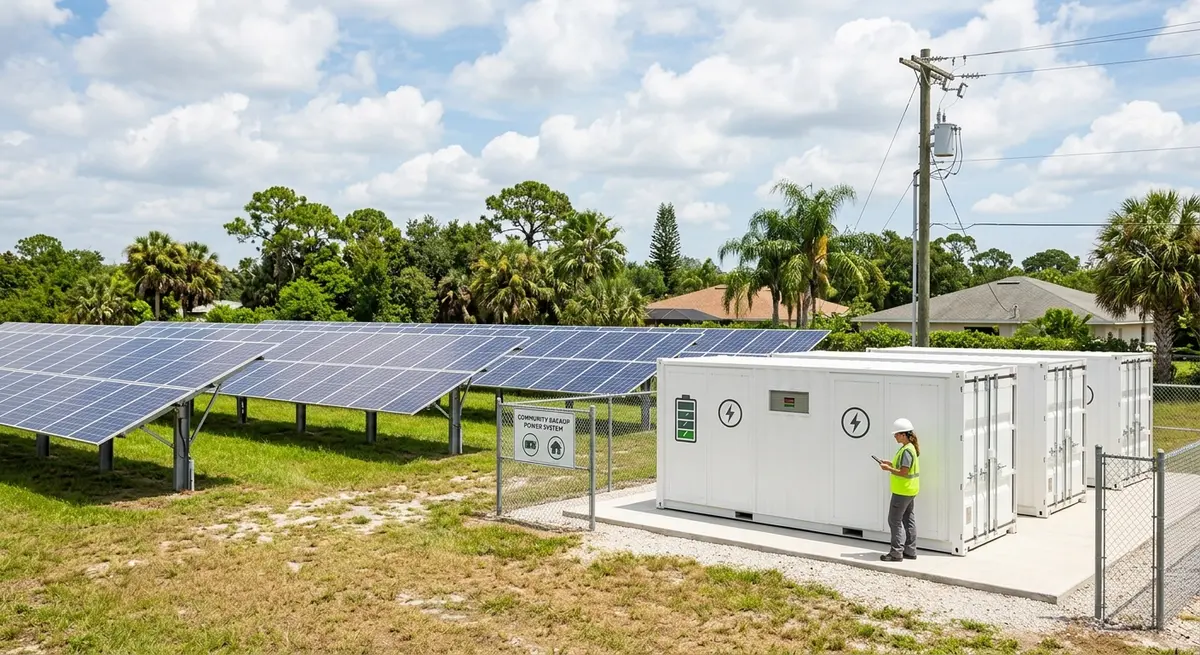
“Solar microgrids have revolutionized post-storm recovery, ensuring critical infrastructure remains operational when traditional grids fail,” states Elena Rostova, Energy Systems Analyst at the National Renewable Energy Laboratory. By utilizing massive arrays—often consisting of over 300,000 solar panels—paired with commercial-grade battery storage, these communities can island themselves from the failing regional grid. This ensures that supermarkets, medical facilities, and water treatment plants continue to function seamlessly.
For residents, living in a solar-powered community means peace of mind. The combination of subterranean power delivery and localized solar generation creates an incredibly robust energy ecosystem. Even if the sun is obscured during the storm, the massive battery reserves provide uninterrupted power, keeping air conditioning running and refrigerators cold.
The Financial Impact: Insurance and Long-Term Value
Beyond the obvious safety benefits, investing in resilient infrastructure makes profound financial sense. In 2026, the property insurance market heavily penalizes older, vulnerable structures while rewarding fortified homes. Data published by the Insurance Information Institute indicates that homeowners in certified resilient communities pay significantly less for coverage.
“Investing in impact-resistant envelopes pays immediate dividends through drastically reduced insurance premiums in today’s market,” explains David Chen, Senior Actuary at the Florida Property Insurance Board. Homeowners can see up to a 30% reduction in their annual premiums when their property features impact glass, a newer roof with secondary water barriers, and a verified continuous load path.
Furthermore, the real estate market has responded to climate realities. There has been a 40% increase in demand for resilient properties over the last five years. As a result, homes in these master-planned communities are seeing a 15% higher resale value compared to traditional builds. This surge in demand is a key driver behind the rapid population growth and trends seen in forward-thinking developments across the state. Buyers are prioritizing safety, and they are willing to pay a premium for peace of mind.
Frequently Asked Questions (FAQ)
What makes a house truly hurricane-proof in Florida?
A truly resilient house utilizes a continuous load path, connecting the roof, walls, and foundation with heavy-duty steel hardware. It also features impact-resistant windows, a hip roof design to deflect wind, and is built at a high elevation to prevent flood damage. These elements work together to withstand Category 4 and 5 winds.
Do underground power lines prevent outages during a hurricane?
Yes, burying utility lines underground eliminates the risk of power poles snapping or trees falling on wires during high winds. Communities with subterranean infrastructure experience up to 90% fewer outages, ensuring residents maintain electricity, water, and internet access during and after severe storms.
How does elevation affect a community’s storm resilience?
Elevation is the primary defense against storm surge and localized flooding. By building communities on natural ridges or engineered fill that sits 25 to 30 feet above sea level, developers ensure that extreme rainfall and rising waters flow away from homes and into designated retention basins.
Are solar panels safe during high-wind hurricane events?
Modern utility-scale solar panels are engineered to withstand wind speeds exceeding 160 mph. They are bolted to deep-set steel pilings and installed at aerodynamic angles that allow extreme winds to pass over them without causing structural failure, ensuring the community’s energy source remains intact.
Does building to 2026 resilience standards lower homeowners insurance?
Absolutely. Insurance companies offer substantial wind mitigation credits for homes built to modern resilient standards. Features like impact glass, secondary water resistance on roofs, and reinforced masonry can lower annual insurance premiums by as much as 30%.
How do resilient communities manage extreme rainfall?
Instead of relying solely on traditional storm drains, resilient communities use a master-planned approach featuring interconnected lakes, wetlands, and permeable surfaces. This system is designed to absorb and slowly filter the massive water volume of a 500-year storm, keeping streets and homes completely dry.
Conclusion
The concept of a hurricane-proof property has evolved from a simple reinforced structure into a comprehensive, master-planned ecosystem. By combining advanced continuous load path engineering, subterranean utilities, intelligent water management, and solar microgrids, modern developments offer unprecedented safety and peace of mind. As we look toward the future of real estate in 2026, it is clear that proactive resilience is the ultimate luxury. Whether you are analyzing how ownership shapes life in these towns or simply seeking a safe haven for your family, prioritizing these engineering standards is essential. If you are ready to explore properties that offer this level of security and innovation, get in touch with our team today to find your perfect resilient home.