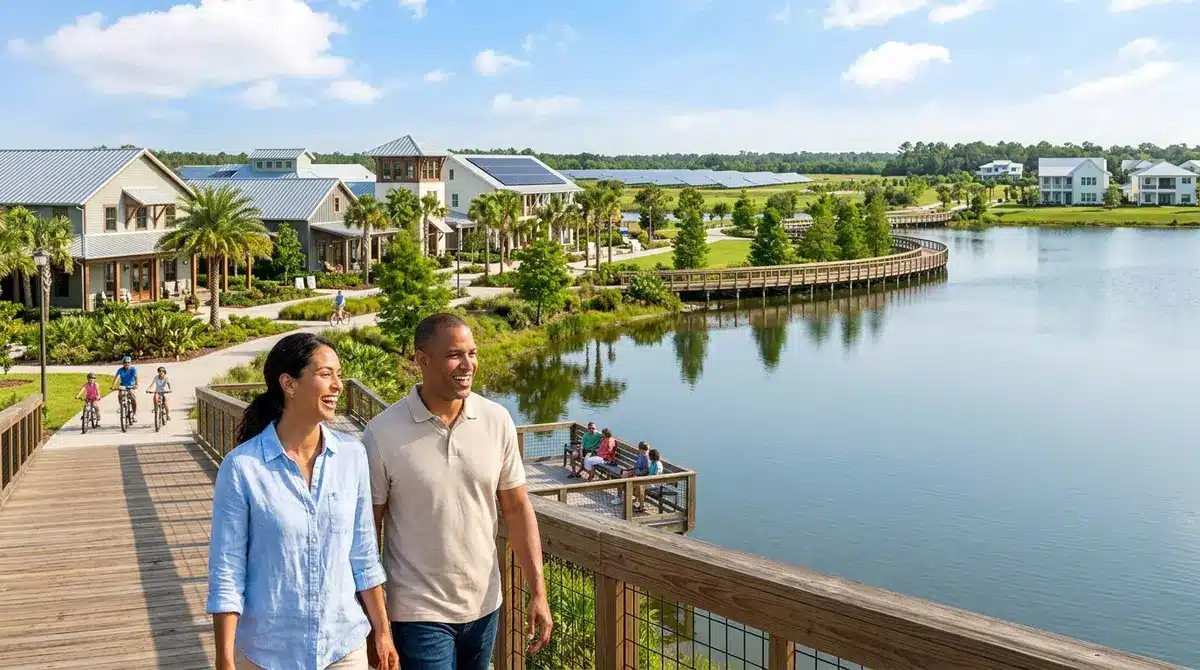

Babcock Ranch is the “Hometown of Tomorrow,” and the Babcock Ranch solar energy center is one of the clearest reasons that phrase feels real when you visit—not just when you read it. If you’re considering a move here, understanding how the community’s solar infrastructure is described (and how it ties into resilience and day‑to‑day livability) can help you make smarter choices about neighborhoods, long‑term costs, and storm‑season confidence.
Key Takeaways
- Babcock Ranch is consistently positioned as a solar-powered community, with site guides emphasizing utility-scale solar as a core part of its identity. Learn how the community describes its solar power infrastructure.
- Different resources describe the solar buildout at different scales (an “energy center” figure versus a broader multi-site solar footprint), so it helps to read both the overview and the resilience-focused writeups. See how the solar microgrid is explained in storm context.
- Storm performance is repeatedly tied to a package of design decisions—solar/microgrid, underground utilities, and site planning—rather than solar alone. Read the storm-resilient community overview.
- If you’re buying, solar and resilience only matter if they match the home you choose—pair the infrastructure story with a practical tour plan using common floor plans and the 2025 housing market analysis.
Overview
If you’re comparing Southwest Florida communities, the practical question isn’t “Is this town marketed as green?”—it’s “How does the infrastructure behave when Florida gets tested?” Babcock Ranch is widely discussed on this site for unusually strong storm performance, with multiple posts linking that outcome to underground utilities and a solar microgrid approach that reduces dependence on the broader grid during disruptions.
What the Solar Energy Center is

When people say “Babcock Ranch solar energy center,” they’re usually referring to the community’s utility-scale solar infrastructure that supports the town’s “solar-powered” identity and reliability narrative. If you want the plain-language version first, start with the site’s community overview and living guide, then go deeper into the technical framing in the solar-focused articles.
For a more dedicated solar explainer, you can also read Solar Energy Innovations at Babcock Ranch and Exploring solar power innovation and energy initiatives.
The numbers buyers should know (as described in site guides)

Because different pages summarize the solar footprint at different scales, it helps to treat the figures as “how this specific page describes it,” then cross-check for context. For example, the community overview describes an energy center figure of 74.5 megawatts and frames it as powering a large number of homes in the broader community context.
In storm-resilience coverage, the solar system is also described at a larger “microgrid” scale, including a 150-megawatt solar energy center with battery storage, plus acreage and panel counts used to explain why the town can remain powered when surrounding areas experience outages. If you want a sustainability-lifestyle framing that also references the larger solar footprint, read the eco-friendly features comparison as a companion piece.
Why battery storage matters in real life
Solar power is most convincing when it stays useful during stress—cloud cover, peak demand, and storm disruptions—so storage and redundancy are the practical features buyers care about. The hurricane-resilience writeups connect battery storage and “microgrid” capability to the town’s ability to maintain power during major storms, especially when the regional grid is strained.
How it affects lifestyle and real estate
You’re not buying solar panels—you’re buying the lifestyle and reliability that well-planned infrastructure can support in a Florida climate. If storm readiness is part of your decision, pair this solar article with Babcock Ranch hurricane proof and flooding and natural-disaster concerns to understand how the site explains wind, water, and utilities together.
For pricing and negotiation context, start with Housing market analysis (2025) and then browse Babcock Ranch homes for sale to connect the infrastructure story to real inventory.
If you work remote, solar resilience often pairs well with flexible home layouts, so it’s smart to review what a flex room is before touring. If you like floor-plan shopping, use common floor plans available to recognize layouts quickly during showings.
Internal links you can place naturally
- Babcock Ranch hurricane proof (storm performance + microgrid framing).
- Storm-resilient community overview (planning + utilities context).
- Solar energy innovations (solar infrastructure explainer).
- Community overview (solar power infrastructure summary).
- Housing market analysis 2025 (pricing + market context).
- Common floor plans (tour-day shortcut).
- Seafood festival lifestyle guide (see the town under “real-world load”).
NAP paragraph (before FAQ)
If you want to connect the babcock ranch solar energy center story to your home search, we’re here to help you make decisions that feel grounded and practical. Start with What Are the Experiences of Buyers Who Went Through the Purchasing Process in Babcock Ranch? and then use our contact page to talk through neighborhoods, timelines, and negotiation strategy.
All Babcock Ranch Homes
Babcock Ranch, Florida
Phone: 518-569-7173
Email: andrelafountain@gmail.com
Contact: https://allbabcockranchhomes.com/contact/
Conclusion CTA
If you’re deciding whether the babcock ranch solar energy center lifestyle fits you, contact us so we can turn your visit into a smart purchase plan based on neighborhoods, floor plans, and the market you’re buying into.
Common Questions About Babcock Ranch Solar Energy Center
What is the Babcock Ranch Solar Energy Center?
It refers to the utility-scale solar infrastructure tied to Babcock Ranch’s identity as a solar-powered community, and it’s frequently discussed as part of the town’s “infrastructure advantage” story. For the resilience angle, the site’s hurricane coverage explains it as part of a broader solar-plus-storage microgrid approach.
How big is it?
Different pages describe the solar footprint at different scales—some summarize an energy center output figure, while others describe a larger combined solar-farm/microgrid scale with acreage and module counts. If you want both perspectives, read the community overview and the hurricane-resilience post back to back.
Does it include battery storage?
Yes—battery storage is included in the site’s description of how the solar system supports reliability, especially in storm conditions and grid disruptions. That storage component is a key part of the “microgrid” framing used to explain why the town can keep operating when surrounding areas lose power.
How does this affect a homebuyer?
It changes the questions you should ask: efficiency features, storm-readiness, neighborhood proximity to town-center services, and the true costs of ownership (including HOA and fees). For due diligence, you may also want to review HOA fee guidance alongside the market analysis and your short list of homes.
What should I read next?
For storms, read the storm-resilient overview; for solar, read the solar innovations guide; for buying decisions, read the buyer experiences post.