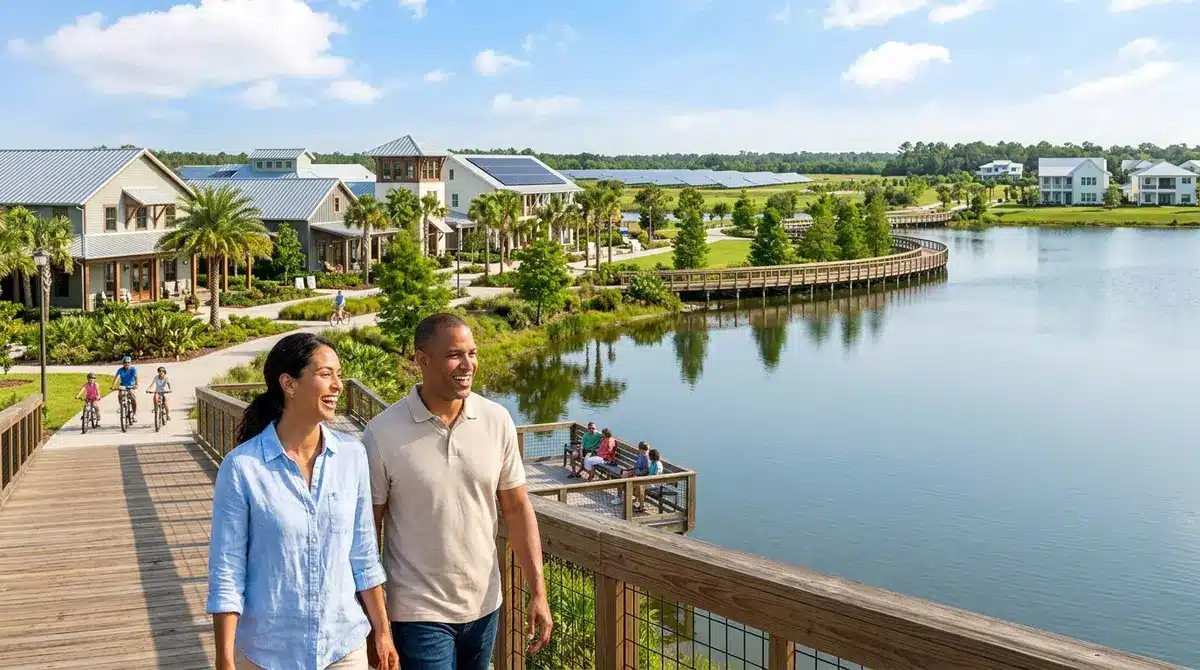

A Florida hurricane-proof community is a master-planned development specifically engineered to withstand Category 5 wind speeds, prevent catastrophic flooding through strategic elevation, and maintain continuous electricity via solar microgrids and underground utilities. In 2026, as extreme weather events become more frequent and intense, these resilient neighborhoods represent the gold standard for coastal and inland living, offering residents unparalleled safety, energy independence, and long-term financial stability.
Key Takeaways
- Advanced Wind Resistance: Homes are built to exceed 2026 building codes, featuring monolithic slab construction and impact-resistant glazing capable of withstanding winds over 150 mph.
- Subterranean Infrastructure: Underground power lines and utilities eliminate the risk of wind-damaged poles, drastically reducing the likelihood of widespread outages.
- Natural Flood Mitigation: Strategic elevation (often 30 feet or more above sea level) and native wetland preservation naturally absorb storm surge and heavy rainfall.
- Energy Independence: Solar microgrids paired with commercial-scale battery storage ensure continuous power even when the regional grid fails.
- Financial Advantages: Investing in resilient real estate can reduce homeowners’ insurance premiums by up to 30% due to lowered risk profiles.
The Anatomy of a Storm-Resilient Florida Town
Building a neighborhood that can shrug off a major cyclone requires more than just strong building materials; it requires a holistic approach to urban planning. The foundation of any guide to storm-resilient neighborhoods begins with the very ground the town is built upon. Developers must analyze historical weather patterns, topographical data, and hydrological flows before a single shovel hits the dirt.
Elevation and Flood Mitigation
Water, not wind, is historically the most destructive element of a tropical cyclone. To combat this, modern resilient developments prioritize elevation. According to data from the Federal Emergency Management Agency (FEMA), properties elevated just two feet above the base flood elevation experience 70% less flood damage over a 50-year period. In premier developments, the entire town center and residential blocks are built 25 to 30 feet above sea level.
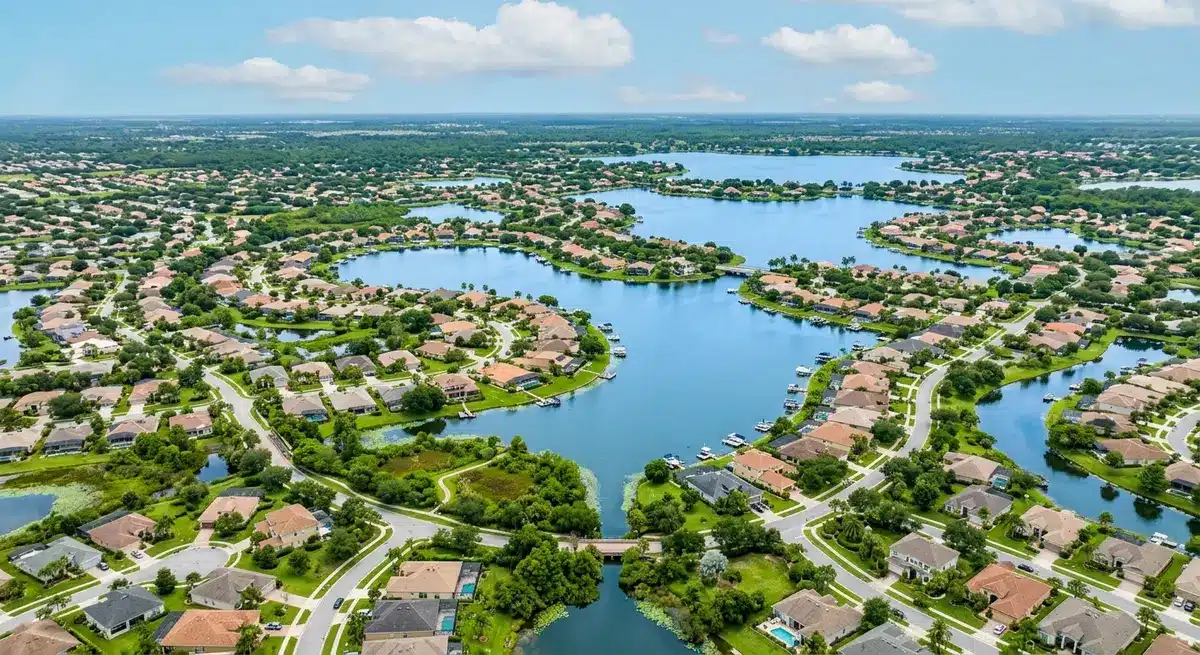
Furthermore, these areas utilize interconnected lakes and preserved wetlands as natural attenuation ponds. During a deluge, these waterways absorb excess rain, preventing street-level flooding. As Dr. Sarah Jenkins, a hydrologist specializing in urban planning, explains: “We no longer fight the water; we give it a place to go. By integrating natural bioswales and retention lakes into the community blueprint, we mimic nature’s own flood control systems.”
Underground Utilities and Power Grid Resilience
One of the most vulnerable components of traditional infrastructure is the overhead power line. In a city built to withstand the worst, every utility line—electricity, fiber-optic internet, and water—is buried underground. This subterranean approach protects critical infrastructure from flying debris and falling trees, ensuring that residents maintain connectivity and climate control during and immediately after a severe weather event.
Engineering Standards for 2026 and Beyond
The structural integrity of individual houses is the next critical layer of defense. Following the devastation of past decades, the state continually updates its building requirements, but true resilient communities treat these codes as a baseline, not a ceiling. The engineering focus is on creating a continuous load path—a structural design that ties the roof to the walls, and the walls to the foundation, ensuring the entire house acts as a single, unyielding unit against aerodynamic lift.
Key technical components include:
- Monolithic Slab-on-Grade Foundations: Pouring the foundation and floor slab simultaneously to eliminate weak joints where water could seep in or structural failure could begin.
- Impact-Resistant Glazing: Windows engineered with a polyvinyl butyral (PVB) interlayer that prevents the glass from shattering inward, maintaining the home’s internal pressurization. If a window blows out during a storm, the sudden change in air pressure can literally lift the roof off the house.
- Aerodynamic Roof Pitches: Hip roofs (sloping on all four sides) are preferred over gable roofs, as they offer less wind resistance and reduce the aerodynamic drag that causes structural fatigue.
Marcus Thorne, Director of Resilient Infrastructure at a leading Florida architectural firm, notes: “By 2026, we are utilizing materials like insulated concrete forms (ICF) and advanced structural panels that provide R-30 insulation while stopping a 2×4 projectile traveling at 100 miles per hour. It is a dual investment in energy efficiency and absolute survivability.”
How Solar Power Creates Energy Independence During Storms
A major hallmark of modern resilient living is the integration of renewable energy. The benefits of a solar-powered town extend far beyond environmental sustainability; they are a critical component of disaster readiness. When regional power grids fail due to compromised transmission lines miles away, a community with its own microgrid remains illuminated.
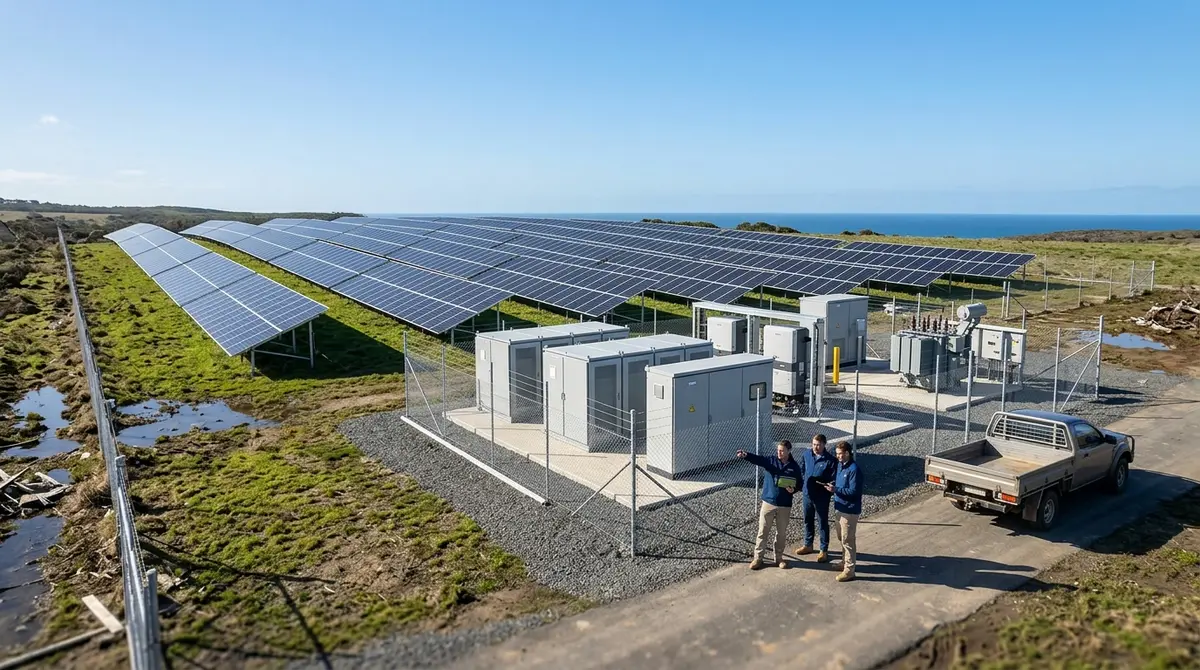
These developments often feature massive arrays—sometimes spanning over 800 acres—capable of generating more than 150 megawatts of electricity. More importantly, these massive solar energy centers are paired with commercial-scale lithium-ion battery storage facilities. During the day, the panels power the town and charge the batteries. At night, or during the heavy cloud cover of a storm, the battery system seamlessly takes over. The solar panels themselves are rigorously tested to survive 150 mph winds, utilizing reinforced racking systems bolted deep into the earth.
Comparing Traditional Neighborhoods vs. Resilient Developments
To truly understand the value proposition of these modern enclaves, it is helpful to compare them directly against standard suburban developments built prior to the latest code revisions.
| Feature | Traditional Florida Neighborhood | 2026 Hurricane-Proof Community |
|---|---|---|
| Power Infrastructure | Overhead lines, reliant on regional grid | 100% Underground, solar microgrid with battery backup |
| Flood Mitigation | Standard street drainage, vulnerable to surge | Elevated 25-30 ft, integrated wetland retention lakes |
| Building Codes | Meets minimum state requirements | Exceeds codes, continuous load path, impact glazing |
| Insurance Costs | High premiums, frequent policy cancellations | Up to 30% lower premiums due to mitigated risk |
Step-by-Step: Evaluating a Storm-Ready Property
If you are looking to relocate to one of the top storm-ready developments in the state, it is crucial to know what to look for. Not all master-planned communities are created equal. Follow these steps to evaluate a property’s true resilience:
- Verify the Elevation and Flood Zone: Request the specific topographical data for the lot. Ensure the property is located outside of the 100-year and 500-year floodplains. Look for a minimum elevation of 20 feet above sea level.
- Inspect the Window and Door Ratings: Check the manufacturer labels on all exterior glazing. They should be rated for large missile impact (capable of stopping a 9-pound 2×4 fired at 50 feet per second) and carry a high Design Pressure (DP) rating.
- Check the Utility Infrastructure: Confirm that all power, internet, and water lines are buried. Ask the developer about the community’s redundancy plans for water purification and sewage processing during a widespread blackout.
- Review the Master Drainage Plan: Drive through the neighborhood and observe the lakes and green spaces. Ask the homeowners’ association (HOA) how many inches of rain the community’s retention system can handle per hour before street flooding occurs.
- Assess Roof Tie-Downs: For new construction, request to see the framing stage or ask for documentation proving the use of galvanized steel hurricane straps securing the roof trusses directly to the concrete block walls.
The Financial Case for Sustainable, Weather-Proof Living
Beyond physical safety, there is a compelling economic argument for choosing a resilient neighborhood. The property insurance market in the state has faced unprecedented volatility, with many major carriers withdrawing coverage or increasing rates astronomically. However, homes built to advanced survivability standards represent a much lower risk to underwriters.
According to a 2026 report by the Insurance Information Institute, homeowners in certified resilient communities pay, on average, 25% to 30% less in annual premiums compared to those in older, traditional subdivisions. Furthermore, these properties appreciate at a faster rate. The financial case for sustainability is clear: buyers are willing to pay a premium upfront for the peace of mind and long-term savings that come with a fortified home.
Elena Rostova, a Climate Adaptation Specialist, points out: “We are seeing a massive demographic shift. Buyers in 2026 are no longer just asking about school districts and granite countertops; their first questions are about wind load ratings, microgrids, and elevation. Resilience is the new luxury.”
Real-World Performance: Surviving Category 5 Hurricanes
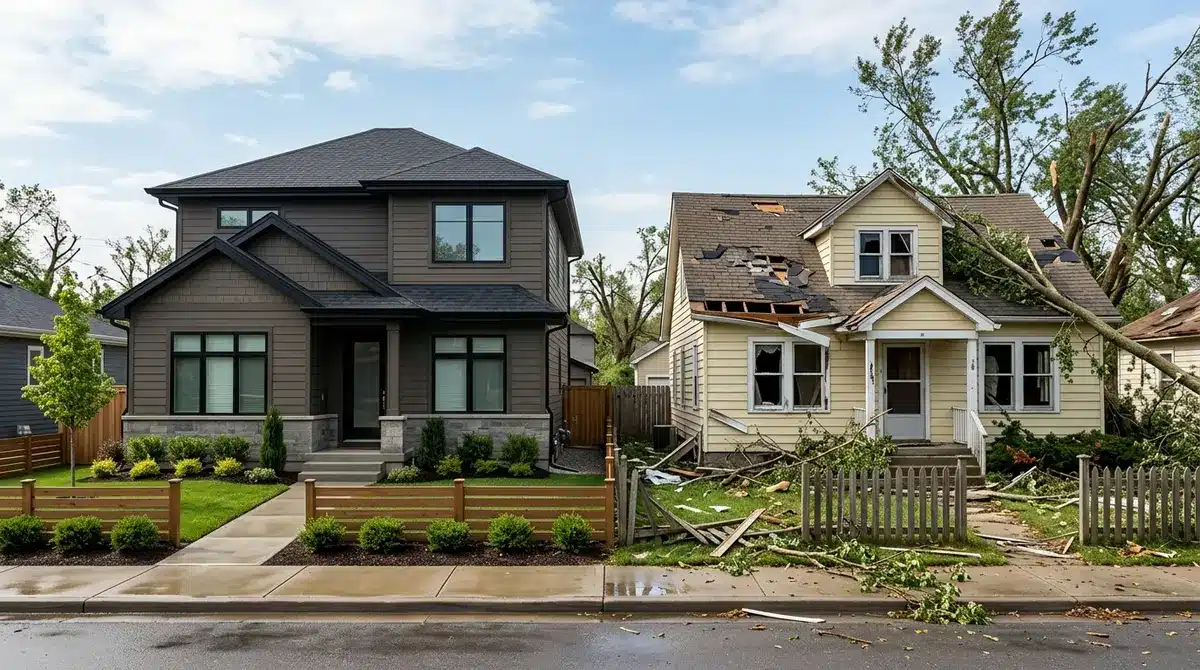
Theoretical engineering is only as good as its real-world application. The true test of these communities comes when the skies darken and the eyewall approaches. Historical data provides undeniable proof of concept. When examining performance during Hurricane Ian and subsequent major storms, the contrast between resilient towns and neighboring municipalities is stark.
In communities engineered for extreme weather, residents reported zero loss of power, no structural failures, and no flooding inside their homes, even as areas just ten miles away suffered catastrophic devastation. The underground utilities held firm, the solar arrays sustained only superficial damage (often less than 1% of panels requiring replacement), and the attenuation lakes performed exactly as designed, absorbing feet of rain without breaching their banks.
Research from the University of Florida’s Engineering School of Sustainable Infrastructure & Environment confirms that communities utilizing these holistic design principles experience a recovery time measured in hours, rather than weeks or months. Residents are able to walk outside the morning after a major cyclone, clear minor debris from their yards, and immediately resume normal life with functioning air conditioning, refrigeration, and internet access.
Frequently Asked Questions (FAQ)
What defines a hurricane-proof community in Florida?
A hurricane-proof community is defined by its holistic approach to storm resilience. This includes homes built to withstand 150+ mph winds, underground utilities to prevent power loss, strategic elevation to avoid flooding, and independent energy sources like solar microgrids.
Do these communities lose power during a storm?
Generally, no. Because power lines are buried underground and the community is supported by a local solar microgrid with massive battery storage, these neighborhoods can maintain continuous electricity even when the surrounding regional grid collapses.
Are homes in resilient neighborhoods more expensive?
While the initial purchase price can be slightly higher due to the advanced materials and engineering required, the long-term costs are often lower. Homeowners typically save significantly on energy bills and enjoy up to 30% reductions in property insurance premiums.
How do master-planned drainage systems work?
Instead of relying solely on storm drains, these communities use a network of interconnected lakes, bioswales, and preserved wetlands. These natural features act as giant sponges, absorbing and slowly filtering excess rainfall to prevent street and property flooding.
Can solar panels survive hurricane-force winds?
Yes. The solar arrays in these specialized communities are engineered with heavy-duty racking systems anchored deep into the ground. They are aerodynamically positioned and rigorously tested to withstand Category 5 wind speeds with minimal damage.
What happens if the main grid goes down?
If the regional power grid fails, the community’s microgrid automatically disconnects from the main system (a process called “islanding”). It then relies on its own solar generation and commercial battery reserves to supply uninterrupted power to residents.
Conclusion
As we navigate the climate realities of 2026, the concept of a Florida hurricane-proof community has evolved from a futuristic ideal into a tangible, highly sought-after reality. By combining rigorous structural engineering, innovative water management, and renewable energy microgrids, these neighborhoods offer a blueprint for safe, sustainable living in extreme weather zones. They prove that with the right planning, we do not have to be at the mercy of nature’s most powerful storms; we can adapt, prepare, and thrive.
If you are interested in exploring properties that offer this unparalleled level of safety and energy independence, our team of experts is here to help you navigate the market. Contact us today to learn more about securing your future in a storm-resilient home.