
Key Takeaways
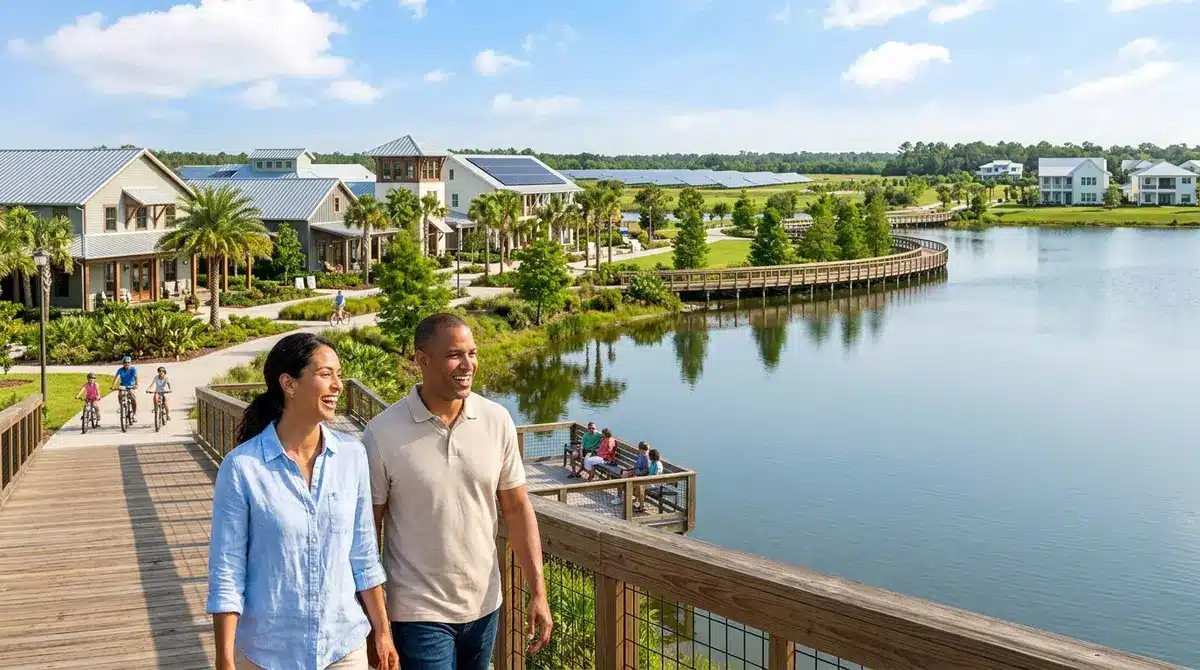
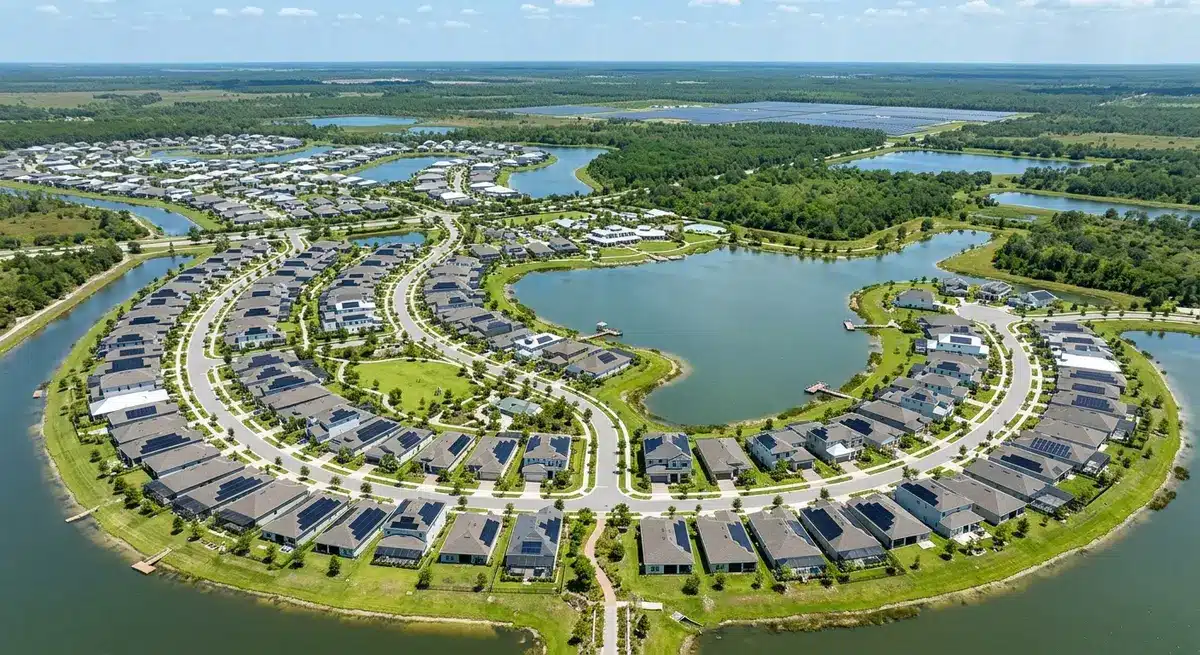
- Energy Independence: Every property is powered by an 870-acre solar facility generating 150 megawatts of clean energy.
- Severe Weather Resilience: Houses are engineered with load-path continuity and impact-resistant glazing to withstand winds exceeding 150 mph.
- Diverse Real Estate Portfolio: The 2026 market offers everything from multi-family villas to luxury single-family estates, with a median property value of $525,000.
- Smart City Infrastructure: All neighborhoods feature native 2.5 gigabit fiber-optic internet built directly into the community framework.
- Financial Predictability: While Community Development District (CDD) fees apply, residents typically see a 30% reduction in monthly energy expenditures.
The 2026 Real Estate Landscape in America’s First Solar Town
The real estate market in this innovative Southwest Florida community has evolved significantly since its inception. Originally conceived as an experimental eco-town, the development has matured into a highly sought-after destination for families, retirees, and remote workers. Understanding the population growth and demographic trends is crucial for prospective buyers looking to invest in this expanding region.
As of 2026, the master plan remains on track to deliver 19,500 planned residences alongside 6 million square feet of commercial space. This balanced approach to urban planning ensures that residential growth is matched by commercial amenities, preventing the “bedroom community” syndrome that plagues many suburban developments. Property values have seen an 8.7% year-over-year appreciation, driven largely by the increasing national demand for climate-resilient housing.
“As Sarah Jenkins, Senior Economist at the National Real Estate Research Council, notes: ‘Master-planned communities that prioritize energy independence are seeing a 14% premium in property valuation compared to traditional neighborhoods in 2026. Buyers are no longer just purchasing a dwelling; they are purchasing infrastructural security.'”
Architectural Styles and Builder Portfolios
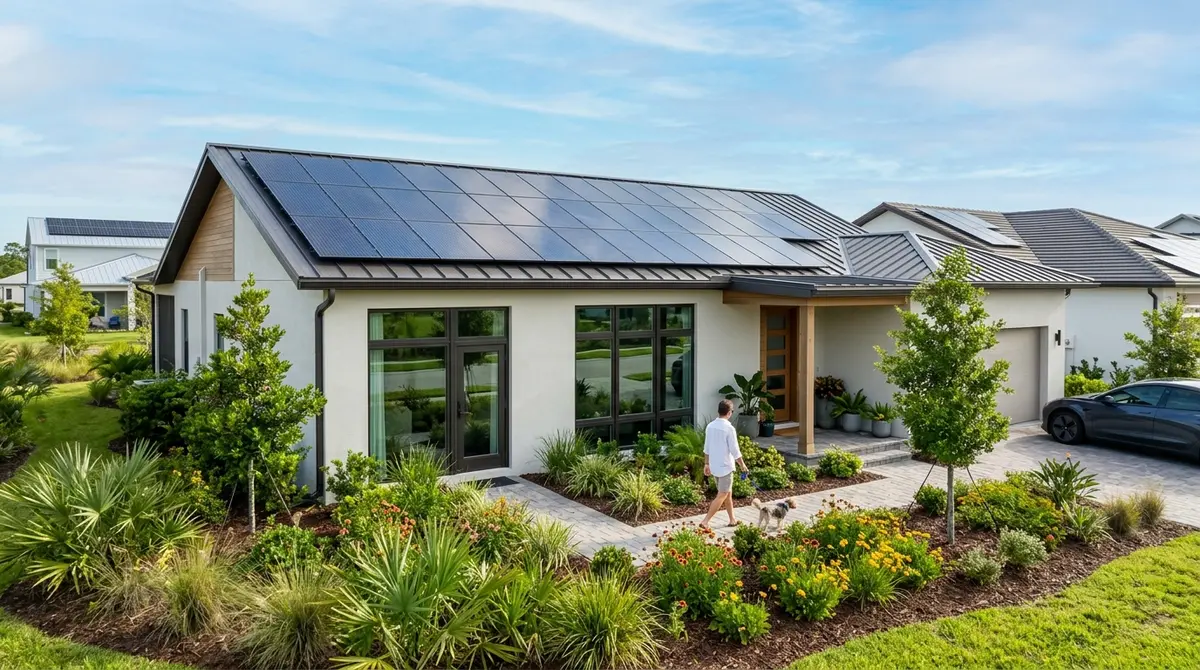
The architectural guidelines of the community mandate a cohesive aesthetic that pays homage to traditional Florida design while incorporating cutting-edge green building standards. The primary architectural styles include Coastal Contemporary, Florida Craftsman, and Modern Farmhouse. These designs emphasize deep, shaded front porches, metal roof accents, and expansive outdoor living areas that blur the line between interior and exterior spaces.
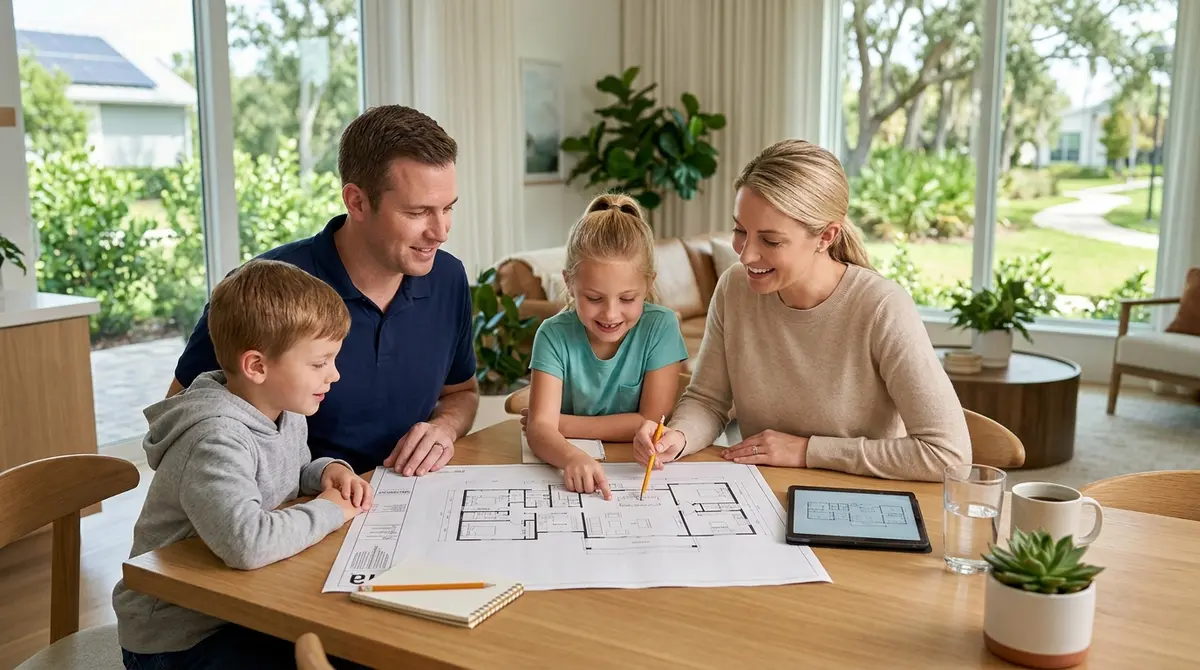
Several top-tier national and regional builders operate within the community, each offering distinct portfolios. Builders such as Pulte, Lennar, Meritage, and WCI have established dedicated neighborhoods, allowing buyers to choose construction styles that best fit their lifestyle needs. Many buyers are currently focused on incorporating a flex room into their floor plans, adapting these versatile spaces into home offices, fitness studios, or multi-generational suites.
Single-Family Residences vs. Multi-Family Villas
Prospective residents must often decide between purchasing a detached single-family house or a low-maintenance attached villa. The choice largely depends on budget, space requirements, and desired level of exterior maintenance. Below is a comparison of the typical property types available in the 2026 market.
| Property Type | Average Square Footage | 2026 Starting Price Range | Target Demographic |
|---|---|---|---|
| Attached Villas | 1,400 – 1,700 sq ft | $350,000 – $450,000 | Retirees, Seasonal Residents |
| Standard Single-Family | 1,800 – 2,500 sq ft | $475,000 – $650,000 | Growing Families, Remote Workers |
| Luxury Custom Estates | 3,000+ sq ft | $800,000 – $1.5M+ | Executives, Multi-Generational |
Engineering for the Future: Hurricane Resilience and Solar Integration
What truly separates these properties from standard Florida real estate is the uncompromising approach to structural engineering and energy integration. The entire town is situated 30 feet above sea level, naturally mitigating the risk of coastal storm surge. Furthermore, every structure is built to withstand severe hurricanes, utilizing advanced building envelopes that exceed standard state building codes.
According to Marcus Thorne, Lead Structural Engineer at BuildSafe America: ‘The load-path continuity required in these properties ensures that wind forces are transferred seamlessly from the roof down to the foundation, drastically reducing the risk of catastrophic failure during Category 5 events.’
Energy independence is achieved through a massive photovoltaic array comprising over 680,000 solar panels. This system is backed by a robust battery storage network, enabling microgrid islanding. When the broader regional power grid fails, the community’s internal grid disconnects and sustains itself. Research from the U.S. Department of Energy highlights that microgrid systems like this represent the future of municipal power distribution, drastically reducing blackout times during natural disasters.
Step-by-Step Guide to Purchasing Property in Babcock Ranch
Navigating the real estate market in a specialized eco-community requires a strategic approach. Buyers must account for unique financing options, specific neighborhood amenities, and community-specific fees. Follow these steps to streamline your purchasing process in 2026:
- Secure Specialized Financing: Begin by exploring eco-mortgages. Many lenders now offer favorable terms for properties with high energy-efficiency ratings. Ensure your pre-approval accounts for the community’s specific fee structures.
- Evaluate Neighborhood Profiles: Each enclave within the town has a distinct character. Some focus on active adult living with private clubhouses, while others are centered around playgrounds and proximity to the local schools.
- Assess the Advantages and Drawbacks: Thoroughly research the advantages and drawbacks of living in this solar town. While the environmental benefits are clear, buyers must be comfortable with strict HOA guidelines and distance from major urban centers.
- Review the Building Envelope Specs: If building new, work with your builder to review the structural upgrades. Ensure the property meets the latest guidelines set forth by the Federal Emergency Management Agency (FEMA) for high-velocity hurricane zones.
- Understand the Closing Costs: Factor in the initial capital contributions required by the Homeowners Association and the Community Development District (CDD) bond assumptions.
Community Amenities and the Solar Lifestyle
Purchasing real estate here is as much about acquiring a lifestyle as it is about buying a physical structure. The community is designed around the concept of walkability and outdoor engagement. Over 50 miles of interconnected trails weave through preserved wetlands, connecting residential neighborhoods to commercial hubs.
The social core of the town revolves around regular events at Founder’s Square, which features a bandshell, splash pad, and waterfront dining. For daily necessities, residents enjoy the convenience of shopping at Crescent B Commons, a retail center anchored by a state-of-the-art Publix supermarket. This localized commercial infrastructure means residents rarely need to leave the community for their daily needs, significantly reducing vehicular emissions.
“As Dr. Elena Rostova, Director of Sustainable Urbanism at the Florida Institute of Technology, explains: ‘The integration of a dedicated solar microgrid with residential infrastructure in Southwest Florida sets a global benchmark for climate-adaptive urban planning. It proves that ecological responsibility and high-end community living are not mutually exclusive.'”
Financial Considerations: HOA Fees, CDD, and Energy Savings
A comprehensive understanding of the financial ecosystem is vital for any prospective buyer. Beyond the base purchase price of the real estate, owners are subject to Homeowners Association (HOA) dues and Community Development District (CDD) assessments. The CDD is a local, special-purpose government framework authorized by Florida law to finance, construct, and maintain the community’s major infrastructure, including the solar arrays, water management systems, and roads.
While these fees add to the monthly carrying costs of the property, they are heavily offset by the inherent efficiencies of the houses. The experiences of buyers with solar energy consistently show a dramatic reduction in utility expenses. Because the dwellings are built with superior insulation, high-efficiency HVAC systems, and smart thermostats, residents typically consume significantly less electricity than those in standard Florida houses. Furthermore, the robust construction standards often result in lower homeowner’s insurance premiums, as the structures are highly rated for wind mitigation.
Data compiled by the National Association of Home Builders indicates that properties built to these advanced green standards save owners an average of $1,200 to $1,800 annually in operational costs compared to houses built just a decade ago.
Frequently Asked Questions
Do I need to install my own solar panels on the property?
No, individual rooftop solar panels are not required. The entire community is powered by a massive central 870-acre solar facility. However, some builders do offer supplementary rooftop panels and localized battery walls as optional upgrades for buyers seeking absolute off-grid capability.
What is the average internet speed in these neighborhoods?
The community is wired with a proprietary fiber-optic network. As of 2026, every residence comes standard with access to symmetrical 2.5 gigabit internet speeds, making it an ideal location for remote workers and tech-heavy households.
Are the properties truly hurricane-proof?
While no structure is entirely “hurricane-proof,” these residences are engineered to be highly hurricane-resilient. They feature impact-resistant glazing, reinforced concrete block construction, and elevated foundations that drastically minimize the risk of wind and flood damage during major storms.
How much are the CDD fees?
Community Development District (CDD) fees vary depending on the specific neighborhood and the size of the lot. In 2026, buyers can expect CDD assessments to range from $1,500 to $3,000 annually, which is typically rolled into the annual property tax bill.
Can I rent out my property?
Yes, leasing is permitted, but it is strictly regulated by the HOA to maintain the community’s integrity. Most neighborhoods require minimum lease terms (often 30 days to 6 months) to prevent the proliferation of short-term, hotel-style vacation rentals.
Is there a hospital or medical facility nearby?
Yes. The community features dedicated health and wellness centers, including urgent care facilities and specialized clinics. For major medical emergencies, comprehensive hospital systems in nearby Fort Myers are easily accessible.
Conclusion
Purchasing real estate in America’s first solar-powered town is an investment in both personal comfort and environmental sustainability. The 2026 market offers an impressive array of properties, from efficient attached villas to sprawling luxury estates, all united by a commitment to renewable energy and severe weather resilience. By understanding the unique financial structures, architectural guidelines, and community amenities, buyers can confidently navigate this innovative housing market.
If you are ready to explore the available properties and experience the future of sustainable Florida living, our team of local experts is here to guide you through every step of the process. Get in touch with our team today to schedule a personalized tour of the community.