
Key Takeaways
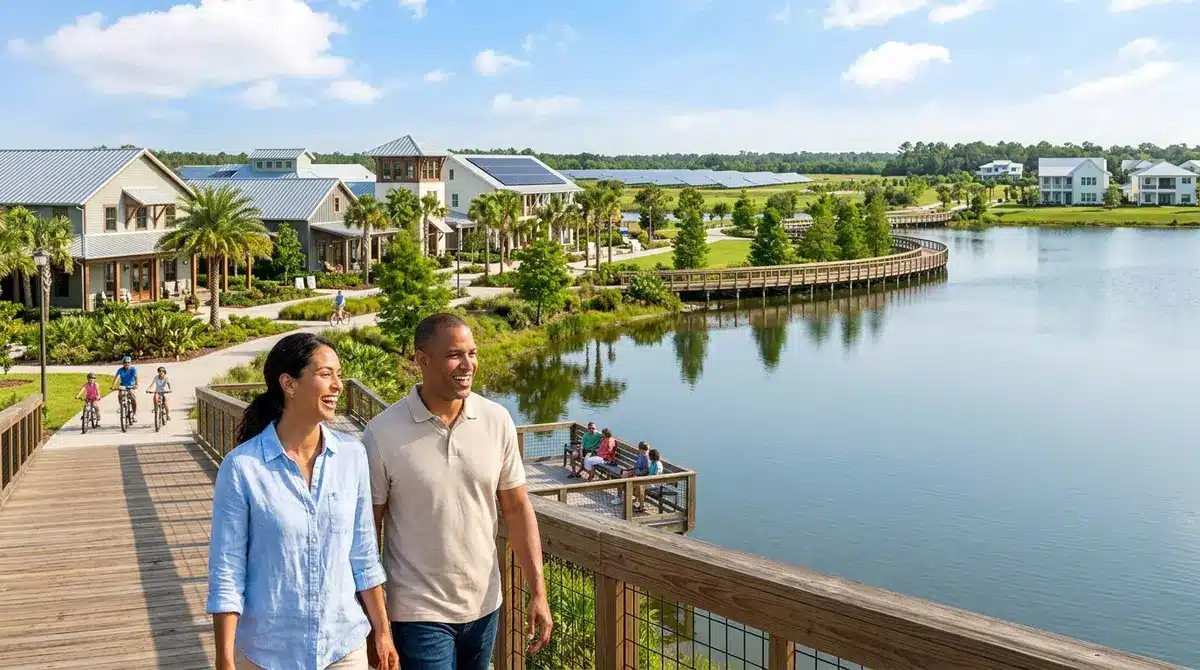
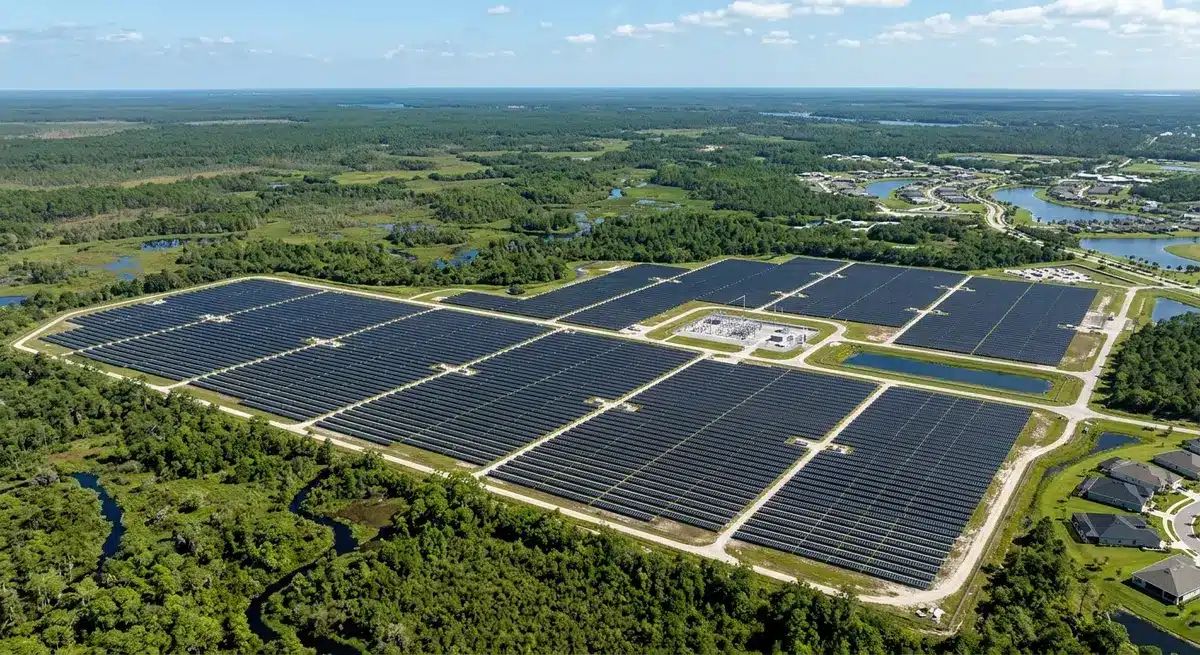
- Renewable Energy: The town is powered by an 870-acre solar facility featuring over 680,000 photovoltaic panels, generating 150 megawatts of clean electricity.
- Hurricane Resilience: Engineered to withstand Category 5 storms, the community features underground utilities, 30-foot elevations, and natural stormwater management.
- Environmental Conservation: Over 50% of the town’s footprint is dedicated to green spaces, lakes, and nature trails, bordering a massive 73,000-acre state preserve.
- Smart City Technology: Every residence is equipped with gigabit fiber-optic internet and smart grid technology for optimal energy efficiency.
- Self-Sustaining Lifestyle: The community includes its own schools, grocery stores, medical facilities, and downtown entertainment districts.
The Vision and Origins of a Sustainable City
Understanding the foundation of this unique municipality requires looking back at one of the most significant land preservation deals in Florida’s history. In 2006, real estate developer Syd Kitson purchased the historic 91,000-acre Crescent B Ranch. In a groundbreaking public-private partnership, Kitson immediately sold 73,000 acres to the State of Florida to create the Babcock Ranch Preserve. The remaining 18,000 acres were designated for a new kind of urban development.
As Syd Kitson, the visionary behind the project, explains: “Our goal was never just to build a neighborhood, but to prove that sustainable, resilient development can coexist harmoniously with Florida’s natural environment.” This philosophy has guided every phase of construction, ensuring that the natural hydrology and local ecosystems remain undisturbed.
According to the Florida Department of Environmental Protection, this initial land sale remains one of the largest single conservation purchases in the state’s history. For those interested in the historical context and the developer’s journey, exploring Syd Kitson’s vision provides deeper insight into how this massive undertaking was achieved.
How the Solar Energy System Works
The defining characteristic of this municipality is its commitment to renewable energy. Through a strategic partnership with Florida Power & Light (FPL), the town operates on a massive microgrid powered by the FPL Solar Energy Center. This 870-acre facility houses approximately 680,000 solar panels, producing 150 megawatts of electricity.
Mark Thompson, a Clean Energy Director at FPL, notes: “By integrating high-capacity battery storage with massive photovoltaic arrays, we ensure uninterrupted power even when the grid faces catastrophic stress.” The system is designed so that during daylight hours, the solar arrays generate significantly more power than the town consumes. The excess energy is fed back into the traditional grid or stored in massive battery centers for nighttime use.
Research from the National Renewable Energy Laboratory (NREL) highlights that communities utilizing integrated solar microgrids experience 40% fewer power disruptions than traditional grid-reliant neighborhoods. This commitment to solar-powered living has made the town a global case study in green energy implementation.
Unmatched Hurricane Resilience and Engineering
In Southwest Florida, severe weather is an inevitable reality. What sets this community apart is its proactive, engineering-first approach to storm survival. The entire town is situated at a minimum elevation of 30 feet above sea level, placing it well above the storm surge zones that typically devastate coastal Florida.
Furthermore, all electrical and telecommunications utilities are buried underground, eliminating the risk of downed power lines from high winds. The stormwater management system is particularly innovative. Instead of relying solely on concrete drains, the town utilizes a network of interconnected lakes and restored wetlands that mimic natural hydrology.
Sarah Jenkins, a lead Resilience Engineer, states: “The stormwater management system mimics natural hydrology, turning potential floodwaters into a community asset rather than a liability.” This engineering prowess was put to the ultimate test during Hurricane Ian in 2022, and subsequent storms leading up to 2026. While surrounding counties suffered catastrophic grid failures and flooding, this community never lost power and experienced zero structural flood damage. The Urban Land Institute has since cited the town as a premier model for climate-resilient infrastructure. Discover more about how the town was built to withstand severe weather.
Real Estate and Neighborhood Design
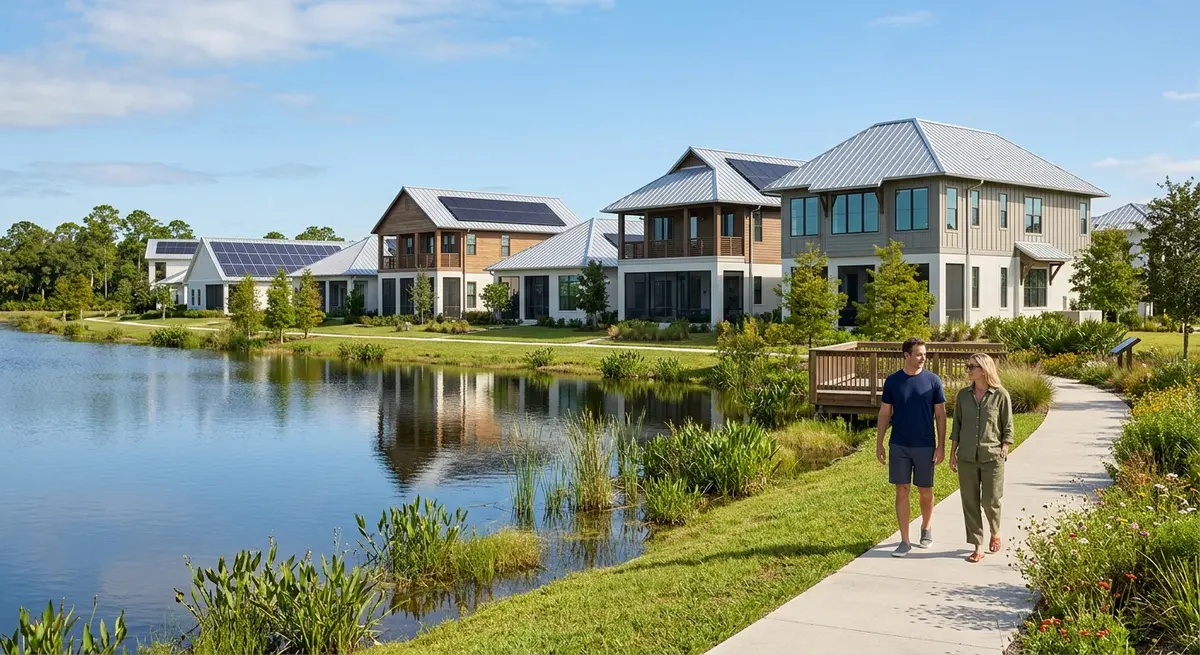
The residential landscape is designed to accommodate a diverse demographic, from young professionals and growing families to retirees. By 2026, the master plan projects a total of 19,500 residences and a population of roughly 50,000 people. The architecture blends classic Florida vernacular styles—such as Craftsman, Coastal, and Spanish Mediterranean—with ultra-modern smart home technology.
Every property is built to strict energy-efficiency standards, featuring high-performance insulation, impact-resistant windows, and energy-efficient appliances. A popular architectural trend within the community is the inclusion of adaptable living spaces, allowing homeowners to easily convert rooms into home offices, gyms, or multi-generational suites.
Dr. Elena Rostova, an Urban Planning Expert at Florida Gulf Coast University, observes: “The microgrid infrastructure implemented here represents the gold standard for climate-adaptive urban design in 2026, seamlessly blending high-tech sustainability with everyday residential comfort.” For those tracking the area’s expansion, the community growth metrics show a steady influx of out-of-state buyers seeking climate security.
Lifestyle, Amenities, and Community Focus
Beyond the impressive infrastructure, the town is designed to foster a deep sense of community and outdoor engagement. With over 50 miles of paved and unpaved trails, residents have endless opportunities for hiking, biking, and wildlife observation. The town’s layout ensures that every neighborhood is within a short walk or bike ride to parks and community centers.
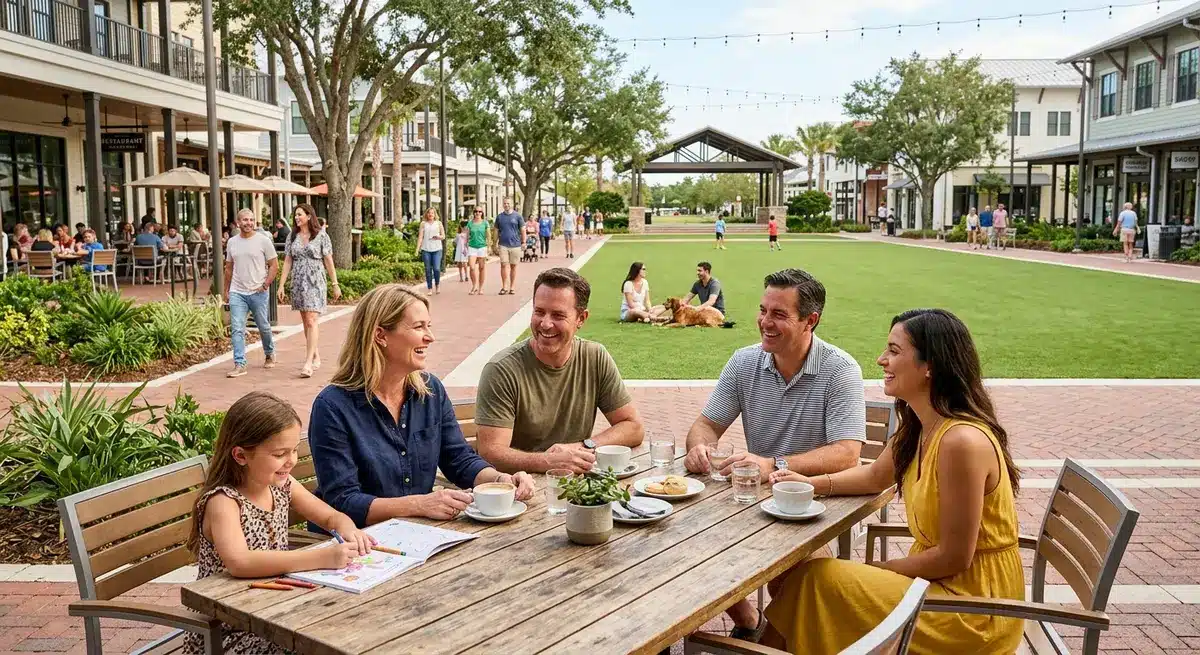
At the heart of the town is Founder’s Square, a vibrant central downtown district that serves as the primary gathering space. It features farm-to-table restaurants, a collaborative workspace, an ice cream shop, and a bandshell for live music. For daily necessities, residents rely on local shopping centers anchored by major retailers like Publix, ensuring that residents rarely need to leave the community for essentials.
The social calendar is equally robust, featuring weekly farmers markets, holiday parades, and renowned culinary events like the annual local culinary events, which draw visitors from across the state.
Comparing Babcock Ranch to Traditional Florida Communities
To truly understand the value proposition of this innovative city, it is helpful to compare its core features against standard residential developments in Florida.
| Feature | Babcock Ranch | Traditional Florida Community |
|---|---|---|
| Power Source | 150 MW Solar Microgrid with Battery Storage | Standard regional fossil-fuel grid |
| Storm Resilience | 30ft elevation, underground utilities, impact windows standard | Varying elevations, above-ground lines common |
| Green Space | 50% of total land preserved | Typically 10-20% preserved |
| Internet Connectivity | Gigabit fiber-optic to every address | Standard coaxial or limited fiber |
| Water Management | Natural hydrology and interconnected lakes | Concrete drainage and retention ponds |
Step-by-Step Guide: How to Relocate to the Hometown of Tomorrow
Moving to a specialized master-planned community requires careful consideration. If you are planning a relocation in 2026, follow these structured steps to ensure a smooth transition:
- Assess Your Lifestyle Needs: Determine whether you prefer a bustling neighborhood near the downtown district or a quieter enclave bordering the nature preserves.
- Tour the Neighborhoods: The community features over a dozen distinct neighborhoods, each with its own architectural guidelines and amenity centers. Schedule a visit to walk the streets and experience the environment firsthand.
- Evaluate the Builders: There are multiple approved builders operating within the town. Research their floor plans, energy-efficiency ratings, and standard inclusions (such as smart home tech and impact windows).
- Review HOA and CDD Fees: Understand the financial structure. Residents pay Homeowner Association (HOA) fees for neighborhood upkeep and Community Development District (CDD) fees, which fund the town’s advanced infrastructure.
- Finalize Smart Home Features: Work with your builder to customize your gigabit network setup, solar panel integrations, and adaptable room layouts to maximize your property’s efficiency.
Frequently Asked Questions
Where exactly is the community located?
It is situated in Southwest Florida, primarily in Charlotte County, with portions extending into Lee County. It is located approximately 15 miles northeast of Fort Myers, providing easy access to the Southwest Florida International Airport and Gulf Coast beaches.
Is the town truly 100% solar-powered?
Yes, from a net-metering perspective. The on-site solar energy center generates more electricity annually than the entire town consumes. Excess power is fed into the regional grid, making the community a net-positive energy producer.
How did the infrastructure survive recent major hurricanes?
The town was engineered specifically for extreme weather. With a 30-foot elevation, underground power lines, and a natural stormwater management system, it sustained zero structural flood damage and never lost power during major storms like Hurricane Ian.
What are the typical HOA and CDD fees?
Fees vary significantly depending on the specific neighborhood and property type. Generally, residents can expect to pay a combination of HOA fees for local maintenance and CDD fees that cover the cost of the town’s advanced roads, utilities, and public amenities.
Are there schools located inside the community?
Yes. The town features its own educational system, including the Babcock Neighborhood School (charter school for K-8) and Babcock High School. Both institutions emphasize project-based learning with a focus on environmental science and technology.
How large will the population eventually get?
Upon completion, the master plan allows for 19,500 residential units and approximately 6 million square feet of commercial space. The total population is projected to reach around 50,000 residents once fully built out.
Conclusion
Understanding the intricacies of this pioneering municipality reveals a profound shift in how modern cities can be built. By prioritizing renewable energy, honoring the natural landscape, and engineering for extreme weather resilience, this Southwest Florida town has set a new global standard for sustainable living in 2026. Whether you are drawn by the promise of uninterrupted solar power, the safety of hurricane-proof infrastructure, or the vibrant, nature-focused lifestyle, the community offers a compelling vision of the future.
If you are ready to explore the possibilities of living in America’s first solar-powered town, expert guidance is essential to navigate the various neighborhoods, builders, and property options. Contact us today to speak with our dedicated team and begin your journey toward sustainable living.