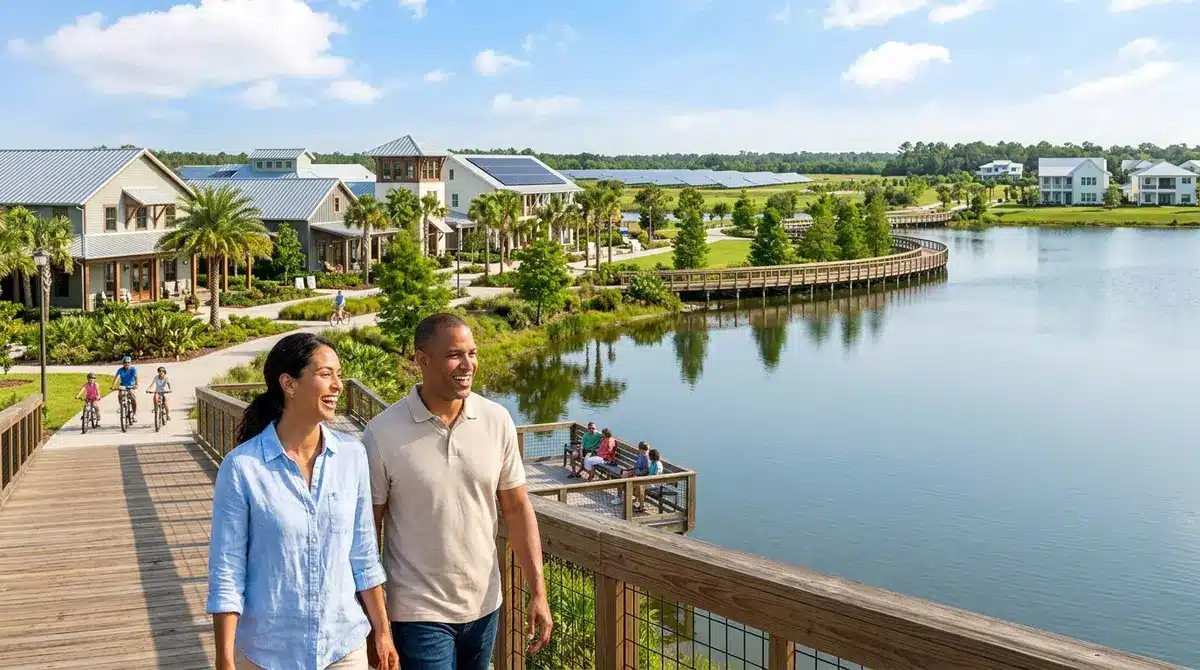

Living in Babcock Ranch offers unparalleled hurricane resilience, a 100% solar-powered infrastructure, and a tight-knit, master-planned community atmosphere. However, prospective buyers must carefully weigh these significant benefits against notable drawbacks, including geographic isolation from major city centers, the reality of ongoing construction noise, and complex fee structures involving Community Development District (CDD) assessments. Ultimately, the decision hinges on whether a buyer prioritizes ecological sustainability and storm safety over immediate urban convenience and lower baseline property taxes.
Key Takeaways
- Unmatched Resilience: The community is engineered to withstand Category 5 hurricanes, featuring underground power lines and advanced water management systems.
- Energy Independence: Powered by a massive solar array, residents enjoy a reduced carbon footprint and stable energy infrastructure.
- Financial Considerations: Buyers must account for both Homeowners Association (HOA) fees and mandatory CDD assessments, which impact monthly carrying costs.
- Location Factors: The inland location provides storm protection but requires a 30- to 45-minute commute to Fort Myers and coastal beaches.
- Development Phase: As of 2026, the town is still actively expanding, meaning residents will experience ongoing construction traffic and noise in newer neighborhoods.
The Vision of America’s First Solar-Powered Town
When evaluating the lifestyle and real estate opportunities in Southwest Florida, few developments command as much attention as this groundbreaking eco-city. Spanning over 18,000 acres—with 50% permanently dedicated to preserved green space—the community represents a paradigm shift in urban planning. By 2026, the town has matured significantly from its initial inception, transforming from a visionary concept into a bustling municipality.
Understanding the full spectrum of what this community offers requires looking beyond the marketing brochures. It demands a critical analysis of the daily realities faced by residents. From the massive solar array that powers the grid to the civic infrastructure supporting a projected 19,500 residences, every aspect of the town was designed with intentionality.
Major Advantages of the Solar City Lifestyle
The benefits of relocating to this innovative community are heavily centered around safety, sustainability, and a robust civic life. For many, these advantages far outweigh any logistical inconveniences.
Unmatched Hurricane Resilience and Infrastructure
Perhaps the most compelling argument for purchasing property here is the community’s structural fortitude. Following the devastating impacts of recent severe weather events, the town’s engineering has been put to the ultimate test. The performance during Hurricane Ian and subsequent storms proved that the resilient design works exactly as intended.
According to the Federal Emergency Management Agency (FEMA), communities built with elevated topographical grading and subterranean utilities suffer exponentially less infrastructure failure during cyclonic events. Here, the streets are designed to act as secondary drainage basins, funneling floodwaters away from residential building envelopes and into an extensive network of retention ponds.
“When evaluating master-planned communities in 2026, buyers must look beyond the amenities and understand the long-term infrastructure investments, particularly regarding climate resilience. The integration of native topography into storm water management here is a textbook example of future-proof urban design.” — Marcus Thorne, Director of Regional Planning at the Urban Land Institute.
Sustainable Living and Energy Efficiency
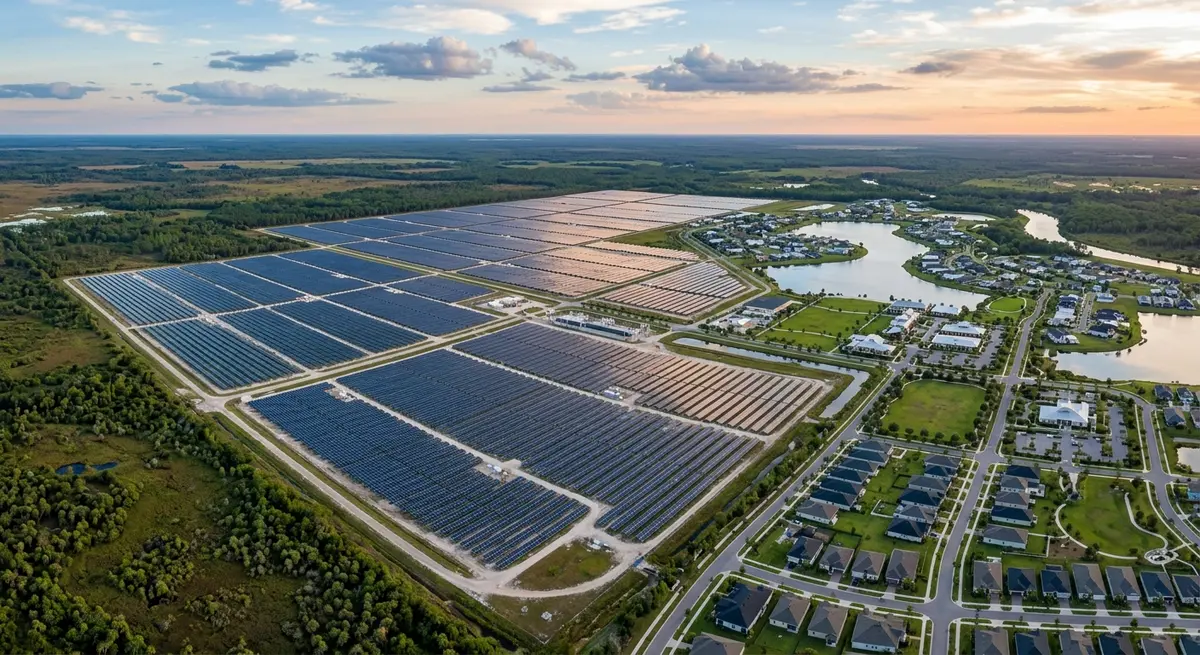
The commitment to renewable energy is not merely a slogan; it is the foundational pillar of the local economy. The town operates in partnership with Florida Power & Light (FPL), utilizing a massive photovoltaic array comprising over 680,000 solar panels. This facility generates more clean energy than the town consumes, feeding the surplus back into the state grid.
Research from the National Renewable Energy Laboratory (NREL) indicates that utility-scale solar integration combined with residential microgrids significantly reduces grid vulnerability. For homeowners, this translates to fewer power outages and a tangible contribution to environmental conservation. Furthermore, all residential construction mandates rigorous energy-efficiency standards, including high-performance insulation and smart-home technologies.
Community Amenities and the “Hometown” Feel
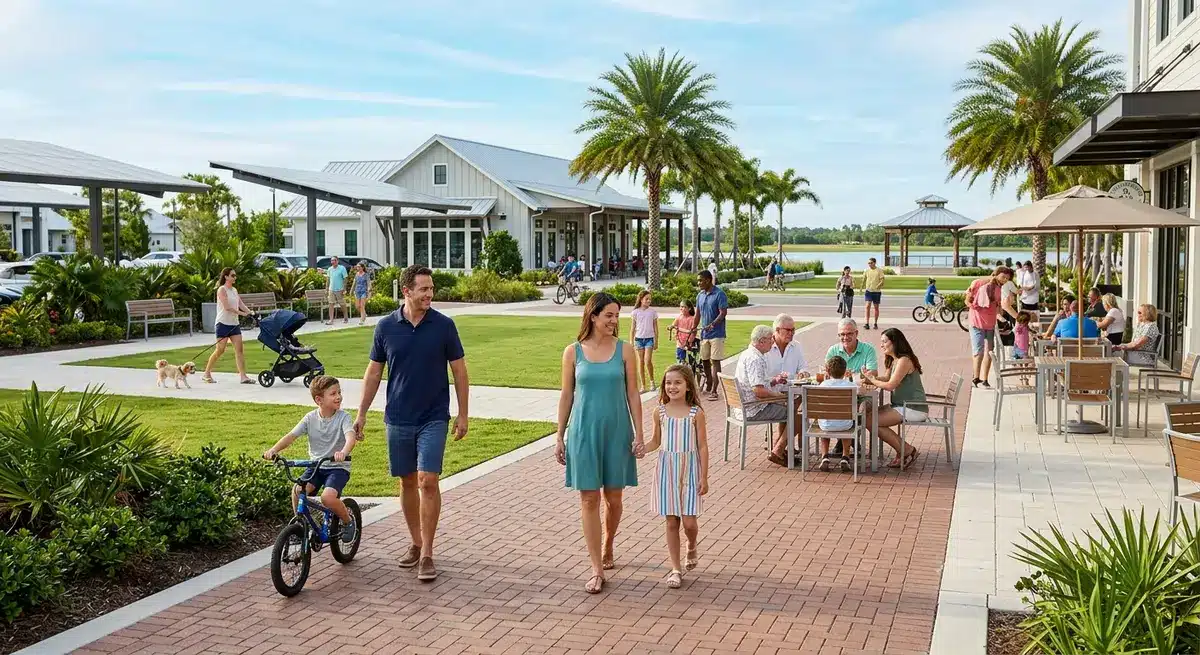
Beyond the technical achievements, the social infrastructure is a massive draw. The development prioritizes walkability and micro-mobility, encouraging residents to use golf carts, bicycles, or autonomous shuttles rather than traditional combustion vehicles. The vibrant downtown district serves as the cultural heartbeat of the area, hosting weekly farmers markets, live music, and holiday festivals.
With multiple community pools, miles of interconnected nature trails, and integrated educational facilities ranging from early learning to high school, the environment is highly conducive to family life and active retirement alike.
Potential Drawbacks to Consider
Despite its many accolades, the community is not a perfect fit for everyone. A balanced assessment requires acknowledging the logistical and financial hurdles that accompany life in a developing eco-town.
Geographic Isolation and Commute Times
One of the most frequently cited disadvantages is the town’s inland location. Situated in Charlotte County, just north of the Lee County line, the community is intentionally set back from the vulnerable coastline. While this provides a critical buffer against storm surge, it also creates a notable commute.
Depending on traffic conditions along State Road 31, the distance to Fort Myers and the Southwest Florida International Airport (RSW) typically requires a 30- to 45-minute drive. For professionals who need to commute daily to coastal business districts, or for retirees who desire immediate beach access, this geographic isolation can become a daily friction point.
The Reality of Ongoing Construction
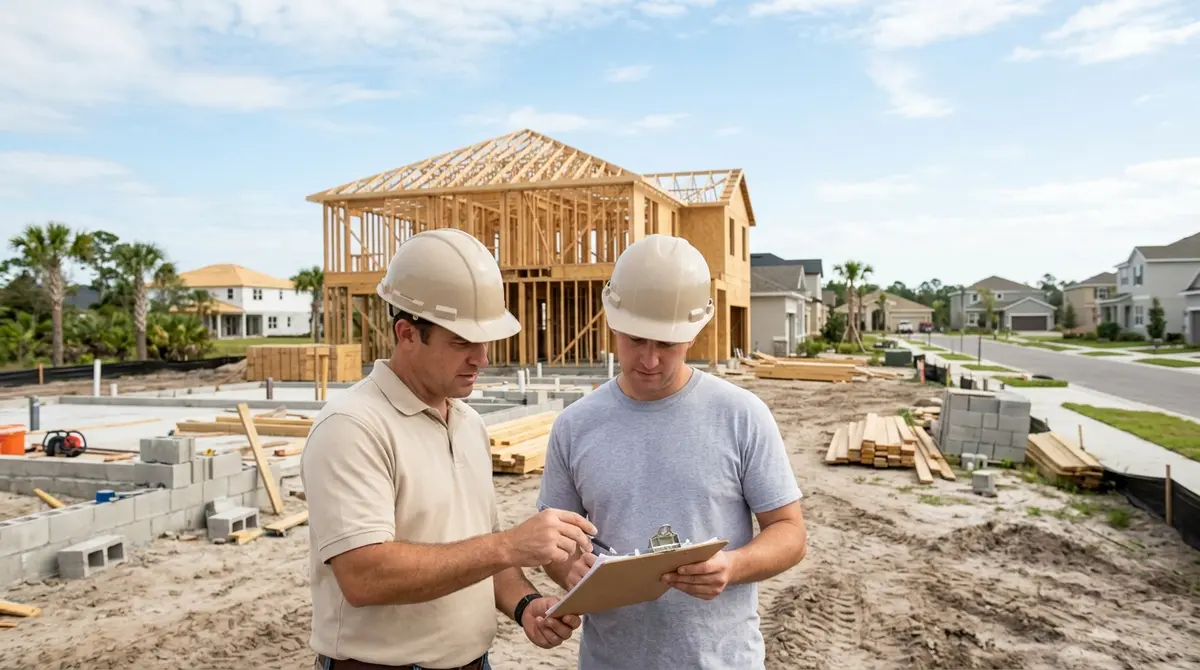
As of 2026, the town is still in a phase of aggressive expansion. The master plan calls for 19,500 homes and 6 million square feet of commercial space upon completion. Consequently, residents in newer neighborhoods must navigate the realities of living in an active construction zone.
This rapid population growth brings heavy machinery traffic, construction dust, and ambient noise during business hours. While developers enforce strict working hours to minimize disruption, early adopters must possess a degree of patience as the community builds out around them.
HOA Fees and CDD Assessments
The financial structure of master-planned communities in Florida can be complex, and this town is no exception. Homeowners are subject to both traditional Homeowners Association (HOA) dues and Community Development District (CDD) assessments. A CDD is a local, special-purpose government framework authorized by Chapter 190 of the Florida Statutes, used to finance, construct, and maintain public infrastructure.
These assessments are added to the annual property tax bill and can significantly increase the monthly carrying cost of a home. Buyers must carefully review these figures during the purchasing process to ensure the total cost aligns with their budget.
“The true cost of homeownership here isn’t just the mortgage; it’s understanding how energy savings offset the mandatory Community Development District assessments. Buyers need a comprehensive view of their monthly liabilities.” — Sarah Jenkins, Florida Real Estate Financial Analyst.
Weighing the Financials: Is the Investment Worth It?
When evaluating the lifestyle and financial implications, it is helpful to visualize the trade-offs. The table below outlines the primary contrasts that prospective buyers must reconcile.
| Feature | The Advantage (Pros) | The Drawback (Cons) |
|---|---|---|
| Location | Inland elevation protects against coastal storm surge and flooding. | 30+ minute commute to major employment hubs and Gulf beaches. |
| Infrastructure | Underground utilities, gigabit internet, and solar-powered grid. | Funded by mandatory CDD fees added to annual property taxes. |
| Community Age | Brand new facilities, modern building codes, and fresh amenities. | Ongoing construction noise and traffic as new phases are built. |
| Environment | Extensive nature trails, lakes, and 9,000 acres of preserved land. | Strict HOA regulations regarding landscaping and exterior modifications. |
Step-by-Step Guide to Evaluating a Move
If you are considering making this innovative town your home in 2026, follow these systematic steps to ensure it aligns with your long-term goals. Making an informed decision requires looking at both the financial case for sustainability and your personal lifestyle preferences.
- Calculate Total Carrying Costs: Request a comprehensive breakdown of property taxes, HOA fees, CDD assessments, and estimated utility costs. Compare this total against a traditional home in a neighboring city like Cape Coral or Fort Myers.
- Test the Commute: Do not rely solely on map applications. Drive from the community to your workplace, preferred beaches, and the airport during peak traffic hours. The Florida Department of Transportation is actively expanding SR-31, but current traffic patterns should dictate your comfort level.
- Evaluate Builder Options: The town features multiple distinct neighborhoods, each constructed by different approved builders. Tour model homes to assess floor plans, standard inclusions, and energy-efficiency ratings.
- Review the Master Plan: Ask the sales center for the 10-year development map. Identify where future commercial centers, schools, and major roadways will be located relative to your prospective lot to avoid unexpected future disruptions.
- Assess Amenity Usage: Be honest about your lifestyle. If you are an avid boater who needs deep-water Gulf access, an inland eco-town may frustrate you. If you prefer golf cart rides to local coffee shops and miles of jogging trails, it will be a perfect fit.
Frequently Asked Questions
Are the homes actually 100% solar powered?
The homes themselves are connected to the traditional FPL power grid. However, the community’s dedicated solar facility generates more than enough renewable energy to offset the total consumption of the entire town, making the community net-solar-powered.
What is a CDD fee and why do I have to pay it?
A Community Development District (CDD) fee is a localized assessment used to pay for the initial infrastructure of a master-planned community, such as roads, water management systems, and utility lines. It is amortized over a set period (usually 20-30 years) and collected annually via your property tax bill.
How did the community fare during recent major hurricanes?
The town performed exceptionally well during recent catastrophic storms, including Hurricane Ian. Thanks to elevated grading, subterranean power lines, and rigorous building codes, the community experienced zero structural flood damage and maintained continuous electrical power while surrounding counties faced weeks of outages.
Is there a grocery store inside the community?
Yes. The town features Crescent B Commons, a commercial plaza anchored by a Publix supermarket. This allows residents to handle daily errands via golf cart without needing to drive out to the main highway.
Can I choose my own custom builder?
No. To maintain architectural consistency and strict energy-efficiency standards, all homes must be constructed by one of the developer’s pre-approved builder partners. However, these builders offer a wide variety of floor plans and customization options.
Conclusion
Deciding whether to invest in America’s premier solar-powered town requires a careful balancing act. The advantages of unparalleled storm resilience, cutting-edge sustainable infrastructure, and a deeply connected community lifestyle are highly attractive in 2026. Conversely, the drawbacks of geographic distance from the coast, the financial weight of CDD fees, and the growing pains of ongoing construction are factors that cannot be ignored.
For buyers who prioritize environmental stewardship, safety from extreme weather, and a family-friendly “hometown” atmosphere, the value proposition is incredibly strong. However, those seeking immediate urban convenience or lower baseline carrying costs may need to look elsewhere.
If you are ready to explore the neighborhoods, review builder floor plans, or run a detailed cost analysis to see if this community is right for you, we are here to help. Contact our team today to schedule a personalized tour and get expert guidance on navigating the Southwest Florida real estate market.