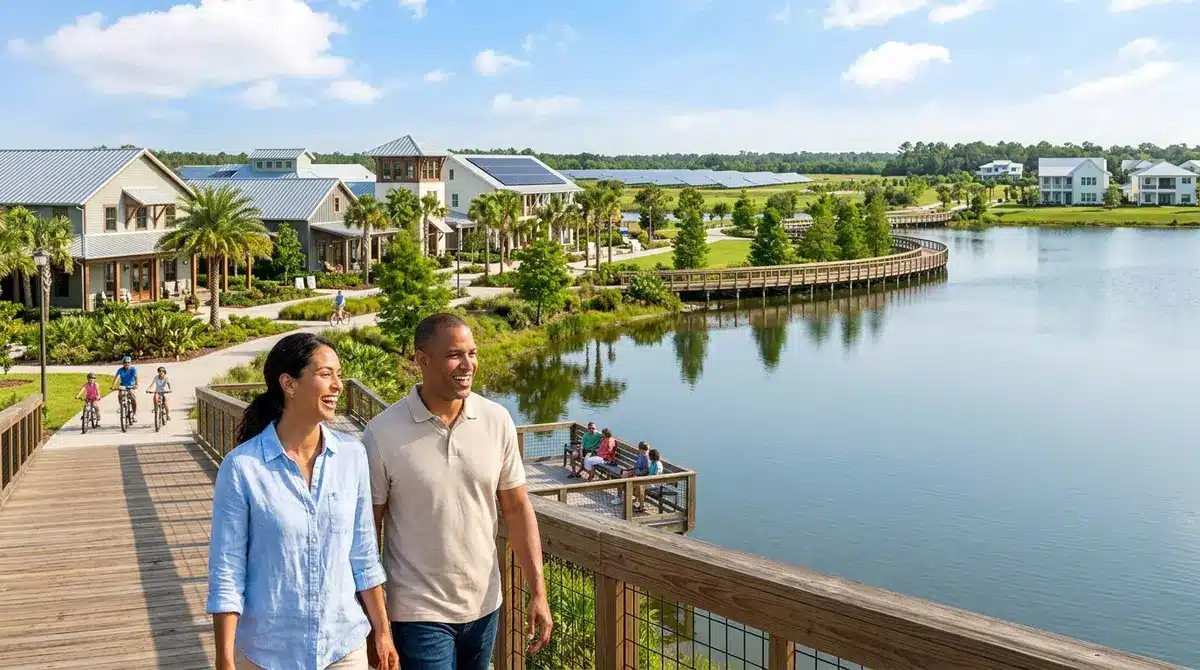
A hurricane-proof community in Florida is a master-planned development engineered to withstand Category 5 storms through elevated topography, underground utilities, impact-resistant building codes, and independent solar microgrids. These neighborhoods prioritize structural load path continuity and advanced water retention systems to eliminate catastrophic flooding and power loss during severe weather events. By integrating sustainable infrastructure with cutting-edge civil engineering, these developments offer residents unparalleled safety and continuous operation even when the surrounding regional grid fails.
Key Takeaways
- Master-planned elevation and natural water management systems prevent catastrophic flooding by utilizing interconnected retention lakes and bioswales.
- Underground power lines and localized solar microgrids ensure continuous electricity and internet connectivity during regional grid failures.
- Homes built to and exceeding the 2026 Florida Building Code standards are designed to withstand sustained winds of over 150 mph.
- Investing in storm-resilient real estate significantly reduces homeowner insurance premiums, often by up to 30% compared to traditional coastal properties.
- Community-wide structural integrity relies on continuous load path engineering, impact-rated glazing, and reinforced concrete block construction.
The Anatomy of a Storm-Resilient Neighborhood
When evaluating a hurricane-proof community in Florida, the focus must extend far beyond the individual home. True resilience is a community-wide endeavor, requiring massive upfront investment in civil engineering and infrastructure. The foundation of this resilience lies in how the land itself is prepared before a single foundation is poured.
Advanced Water Management and Elevation
Water, not wind, is historically the most destructive force during a tropical cyclone. Modern storm-resilient developments mitigate this through strategic elevation and advanced hydrological engineering. By raising the foundational topography of the entire community—often to 25 feet or more above sea level—developers remove homes from high-risk flood zones.
According to research from the University of Florida Shimberg Center for Housing Studies, communities that integrate natural wetlands into their stormwater management systems experience 85% less street-level flooding during extreme rain events. These systems use interconnected retention lakes, bioswales, and native vegetation to absorb and redirect millions of gallons of rainwater, drastically reducing hydrostatic pressure on home foundations.
Underground Utilities and Solar Microgrids
Above-ground power lines are the Achilles’ heel of traditional Florida neighborhoods. In a truly resilient community, all utilities—including electricity, fiber-optic internet, and water lines—are buried underground. This eliminates the risk of wind-toppled poles and falling trees severing critical services.
Furthermore, the integration of solar microgrids has revolutionized disaster readiness. As Dr. Sarah Jenkins, a structural engineer at the Florida Resiliency Institute, explains:
“The implementation of microgrid islanding allows a community to disconnect from the failing regional power grid and sustain itself entirely on locally generated solar power and battery storage. This is the gold standard for 2026 infrastructure.”
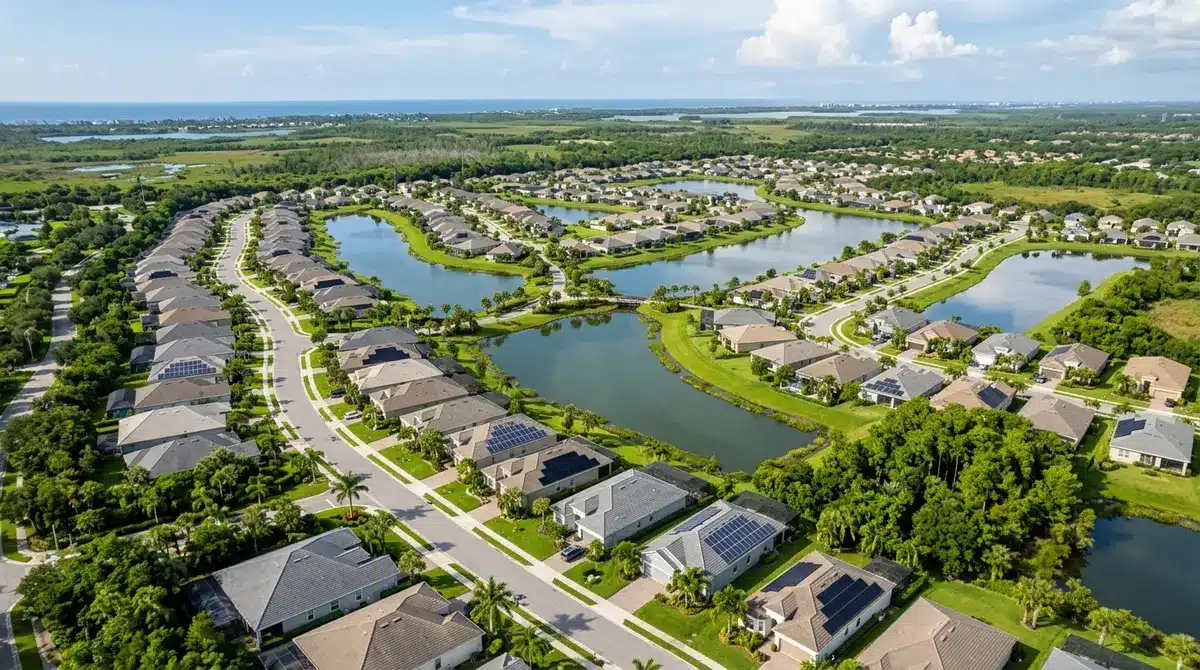
How Florida’s Premier Solar Town Survived Category 5 Conditions
Theoretical engineering is one thing, but real-world performance is the ultimate test. The storm-resilient town model gained international attention following its flawless performance during recent catastrophic weather events. While surrounding counties faced weeks of darkness and devastating floods, this master-planned community never lost power, internet, or water pressure.
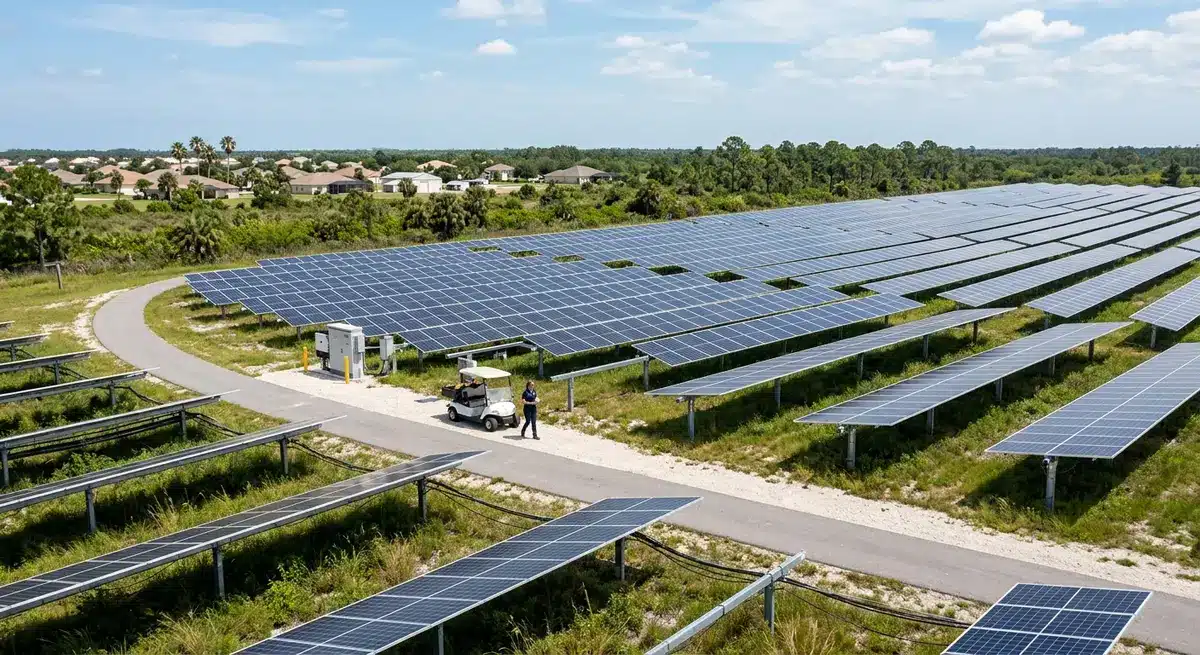
The secret to this success lies in the community’s foundational design. Built adjacent to an 870-acre solar facility containing hundreds of thousands of reinforced panels, the town generates more electricity than it consumes. During extreme weather, the community’s infrastructure demonstrated exactly how a built to withstand the worst environment operates. The performance during Hurricane Ian proved that combining high-elevation grading with impact-resistant architecture is not just a luxury, but a necessity for the future of Florida real estate.
Data from the NOAA National Hurricane Center confirms that the eye of the storm brought sustained winds exceeding 150 mph directly over these resilient structures. Yet, because the homes utilized continuous load path continuity—a structural engineering method tying the roof directly to the foundation with heavy-duty steel straps—structural damage was virtually non-existent.
Essential Features to Look for in Coastal Real Estate
For buyers navigating the 2026 real estate market, distinguishing between a standard subdivision and a truly resilient community requires knowing exactly what features to look for. The differences are often hidden behind the drywall or buried beneath the streets.
| Infrastructure Feature | Traditional Florida Neighborhood | Resilient Master-Planned Community |
|---|---|---|
| Power Grid | Above-ground poles, regional dependency | 100% underground, solar microgrid islanding |
| Water Management | Basic street drains, high flood risk | Engineered wetlands, 25+ ft elevation |
| Window Glazing | Standard glass with manual storm shutters | Missile-impact rated architectural glass |
| Internet Connectivity | Coaxial cables, vulnerable to wind | Underground fiber-optic networks |
The Financial Case for Sustainable, Storm-Ready Housing
Beyond physical safety, the economic realities of living in a hurricane-prone state have shifted dramatically. The Florida property insurance market has seen unprecedented volatility, with many major carriers pulling out of high-risk coastal zones entirely. However, homes located within certified resilient communities are experiencing a completely different financial reality.
According to the Insurance Information Institute, properties built to the latest resilient standards can see insurance premium reductions of 25% to 30%. This makes the financial case for sustainability incredibly strong for long-term buyers. The initial premium paid for a home in a master-planned resilient community is quickly offset by year-over-year savings on insurance, energy costs, and the avoidance of post-storm repair deductibles.
Marcus Thorne, a climate adaptation specialist and real estate analyst, notes:
“In 2026, we are seeing a distinct ‘resilience premium’ in property valuations. Buyers are no longer just looking at granite countertops; they are demanding wind-rated garage doors, whole-home battery backups, and community-wide flood mitigation. Homes that offer this are appreciating at a rate 14% higher than traditional builds.”
Step-by-Step: Evaluating a Neighborhood’s Hurricane Readiness
If you are actively searching for a secure property in Florida, you must conduct a thorough infrastructure audit before making an offer. Follow these numbered steps to evaluate a community’s true readiness:
- Verify the Topographical Elevation: Request the community’s master grading plan. Ensure the foundational elevation sits well above the 100-year and 500-year floodplains designated by FEMA.
- Inspect the Utility Infrastructure: Drive through the neighborhood. If you see wooden power poles and overhead wires, the community is vulnerable to widespread outages. Demand 100% underground utilities.
- Assess the Roof-to-Wall Connections: Ask the builder for the structural engineering schematics. Look for “continuous load path” documentation, which ensures the roof is tied to the walls, and the walls are tied to the foundation using heavy-gauge steel hurricane clips.
- Review the Stormwater Master Plan: A resilient community uses its landscape as a tool. Look for large, interconnected lakes and permeable pavement systems designed to absorb rapid, heavy rainfall.
- Check for Microgrid Capabilities: Investigate whether the community relies solely on the regional power grid or if it utilizes solar-powered microgrids to maintain autonomy during broader grid failures.
The Role of Renewable Energy in Disaster Recovery
The aftermath of a hurricane is often more dangerous than the storm itself, primarily due to prolonged power outages. Without electricity, residents lose access to air conditioning (leading to dangerous heat exposure and mold growth), refrigeration for food and medicine, and communication networks.
This is where the solar city lifestyle transcends environmentalism and becomes a critical survival tool. By utilizing massive solar arrays paired with industrial-scale battery storage facilities, a community can generate, store, and distribute its own power. During a regional blackout, the community’s substation automatically severs its connection to the failing macro-grid—a process known as “islanding”—and switches to its internal battery reserves.
This seamless transition means that while neighboring towns may wait weeks for utility trucks to rebuild shattered infrastructure, residents in a resilient community can continue their daily lives uninterrupted. This level of energy independence is rapidly becoming the most sought-after amenity in Florida real estate, fundamentally building a legacy for the future of urban planning.
Building Codes and the Future of Florida Development
The evolution of the Florida Building Code has been written in the aftermath of historic storms. The 2026 iterations of these codes are the most stringent in the world, mandating severe wind-load testing for all exterior components. However, a true hurricane-proof community does not just meet these codes; it exceeds them.
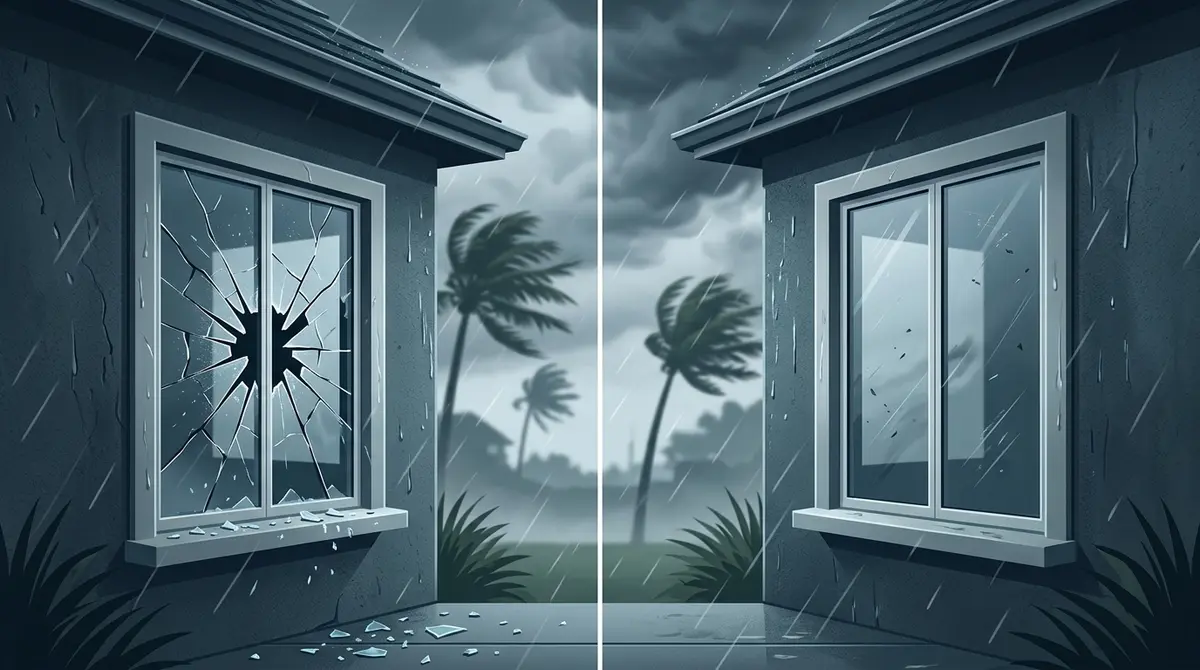
For example, while state codes may require windows to withstand impacts from a 9-pound 2×4 piece of lumber fired at 34 mph, premier resilient developers often opt for glazing that can withstand significantly higher impact velocities. They utilize reinforced concrete block construction for both the first and second stories, rather than transitioning to wood framing on the upper levels. This holistic approach to structural integrity ensures that the homes are not merely survivable, but habitable immediately following a major climatic event.
Frequently Asked Questions
What makes a community truly hurricane-proof?
A hurricane-proof community utilizes a combination of high topographical elevation, underground utilities, advanced stormwater management systems, and impact-resistant building materials. Additionally, the integration of independent solar microgrids ensures the community retains power even when the regional grid fails.
Do hurricane-proof homes cost more to build?
Yes, the initial construction costs are typically 8% to 15% higher due to the use of reinforced concrete, impact-rated glass, and advanced engineering. However, these upfront costs are frequently offset by significant long-term savings on homeowner’s insurance and energy bills.
How do solar panels survive Category 5 hurricane winds?
Utility-scale solar panels in resilient communities are engineered with heavy-duty mounting hardware driven deep into the ground or structurally integrated into the roof. They are aerodynamically positioned and tested to withstand sustained wind loads exceeding 150 mph without detaching or shattering.
Will I still need hurricane shutters if I have impact windows?
No. Missile-impact rated architectural glass is designed to crack but not shatter or breach upon impact, maintaining the pressurized seal of the home. This eliminates the need for manual deployment of heavy metal shutters before a storm.
How does underground infrastructure prevent flooding?
While underground power lines prevent wind damage, flooding is prevented through massive civil engineering projects that elevate the community’s foundational grade. Interconnected retention ponds and bioswales act as a massive sponge, safely directing millions of gallons of rainwater away from residential streets and homes.
Can a community really maintain power during a massive blackout?
Yes, through a process called microgrid islanding. If the community has its own solar generation and industrial battery storage, its substation can disconnect from the failing regional grid and independently power the neighborhood’s homes, grocery stores, and medical facilities.
Conclusion
The concept of a hurricane-proof community in Florida is no longer a futuristic dream; it is a proven, operational reality in 2026. By prioritizing advanced civil engineering, renewable energy microgrids, and uncompromising building standards, developers have created environments where families can thrive without the looming anxiety of hurricane season. As climate patterns continue to evolve, investing in a storm-resilient neighborhood is not just a real estate decision—it is a commitment to safety, financial stability, and peace of mind. If you are ready to explore the safest, most sustainable neighborhoods Florida has to offer, get in touch with our team today to start your journey toward resilient living.