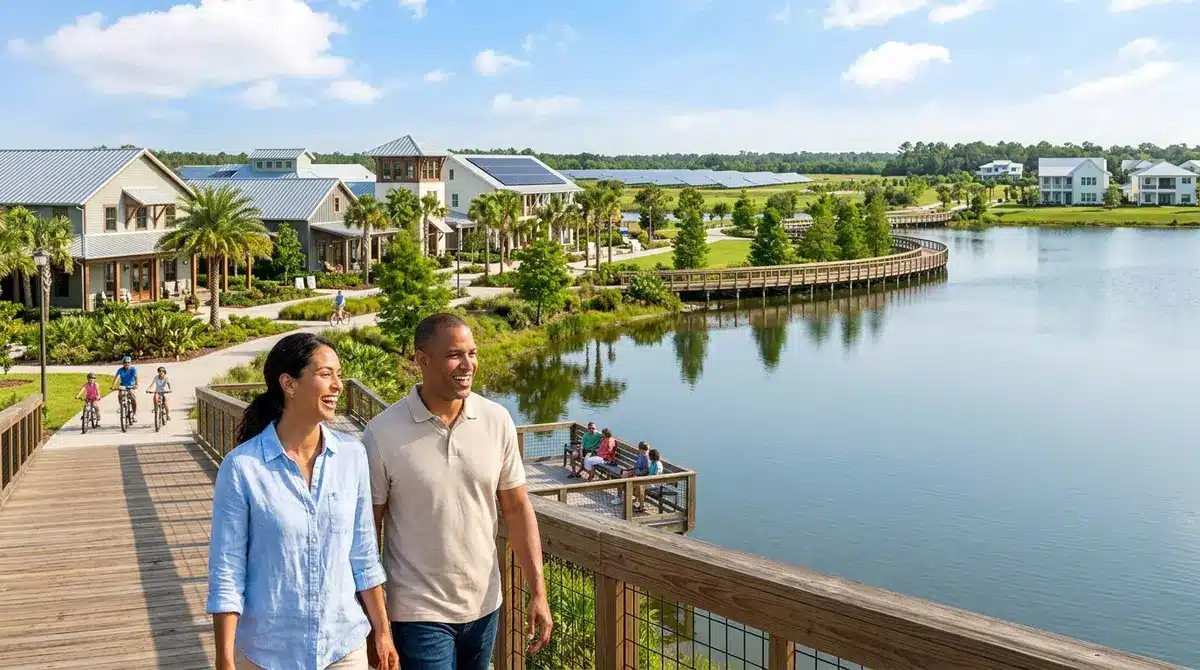

The reality of Babcock Ranch in 2026 is that it successfully delivers on its core promises of solar-powered resilience and community-centric living, but prospective buyers must navigate premium housing costs, mandatory Community Development District (CDD) fees, and a location that requires a deliberate commute for major city amenities. While the town’s engineering marvels have proven themselves against catastrophic weather, the day-to-day lifestyle requires an adjustment to master-planned living that may not suit everyone. Understanding these nuances is essential before making a real estate investment in this highly publicized Florida community.
Key Takeaways
- Proven Resilience: The community’s infrastructure, including subterranean power lines and attenuation ponds, successfully withstood a Category 4 hurricane, maintaining power and preventing floods.
- Financial Realities: Buyers must account for CDD fees, which fund the town’s advanced infrastructure, adding to the monthly carrying costs alongside standard HOA dues.
- Energy Independence: The 870-acre solar facility generates more power than the town consumes, though residents still pay standard utility rates to Florida Power & Light (FPL).
- Location and Commute: Situated in Charlotte County, the town is roughly a 30-to-40-minute drive from downtown Fort Myers and major coastal beaches.
- Master-Planned Lifestyle: The social fabric is highly organized, featuring frequent community events, golf-cart-friendly streets, and centralized commercial hubs.
Unveiling the Reality of America’s First Solar Town
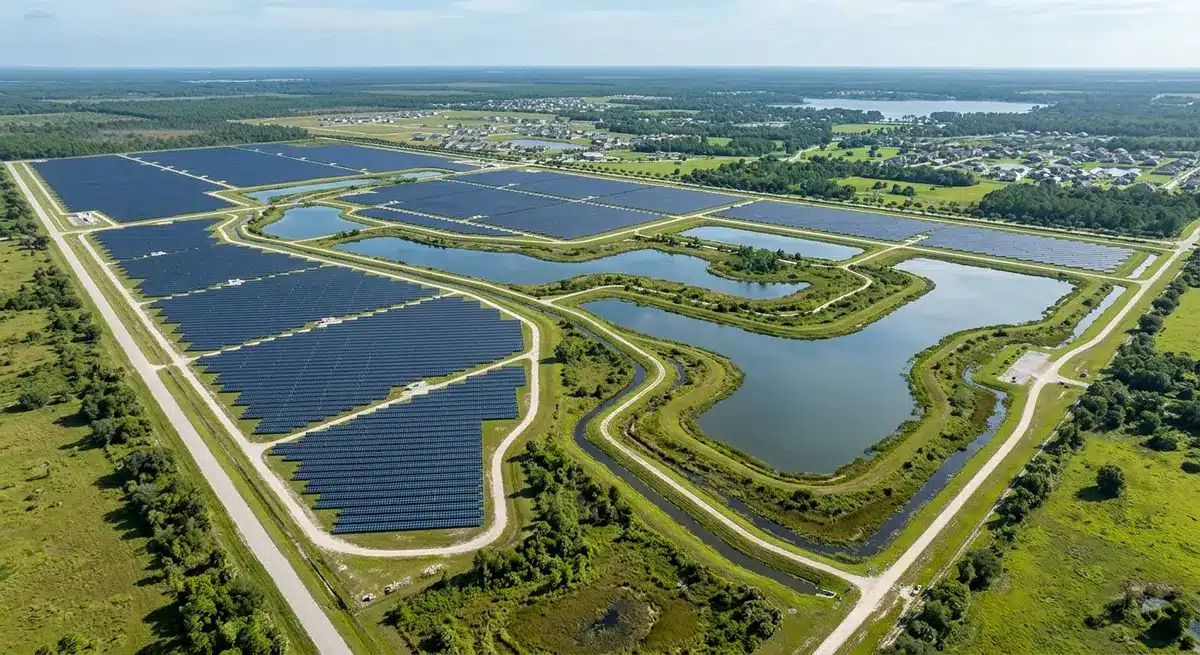
When Syd Kitson first conceptualized this ambitious project, the goal was to create a sustainable, ecologically sound city from scratch. Today, the 870-acre photovoltaic array, boasting over 680,000 solar panels, is fully operational. However, a common misconception among new buyers is that living in a solar town means free electricity. This is not the case.
The solar field feeds directly into the local grid managed by Florida Power & Light. Residents receive standard utility bills, but the underlying benefit is grid stability and environmental impact. According to research from the National Renewable Energy Laboratory (NREL), microgrid systems integrated with large-scale solar arrays significantly reduce regional carbon footprints while providing localized energy security during broader grid failures.
Dr. Sarah Jenkins, an urban planning expert at Florida Gulf Coast University, explains: “The true value of the energy infrastructure here isn’t in eliminating your monthly electric bill; it’s in the robust, decentralized power generation that keeps the lights on when the rest of the county goes dark.”
The Financial Reality: Hidden Costs and Long-Term Value
Evaluating the pros and cons of relocating here requires a deep dive into the financial structure of master-planned communities. The sticker price of a property is only the beginning. Homeowners must factor in Homeowners Association (HOA) fees, which cover neighborhood-specific maintenance, and Community Development District (CDD) fees.
Understanding CDD Fees
A CDD is a local, special-purpose government framework authorized by Florida law to finance, construct, and maintain public infrastructure. Because the town was built entirely from the ground up—including roads, water management systems, and utility lines—these initial capital costs are passed on to homeowners through annual CDD assessments on their tax bills. These fees typically range from $1,500 to $3,000 annually, depending on the lot size and specific neighborhood.
| Cost Category | Standard Florida Community | Babcock Ranch (2026 Averages) |
|---|---|---|
| HOA Fees (Monthly) | $150 – $300 | $200 – $450 (varies by neighborhood) |
| CDD Fees (Annual) | $0 – $1,000 | $1,500 – $3,000 |
| Homeowners Insurance | High (often requires flood insurance) | Lower (built above flood plains, strict building codes) |
| Energy Reliability | Vulnerable to storm outages | Highly resilient microgrid |
Hurricane Resilience: Did the Engineering Hold Up?
The defining moment for the community’s reputation occurred in 2022. When Category 4 winds battered Southwest Florida, the town survived Hurricane Ian with virtually no structural damage and zero loss of power. This was not a stroke of luck; it was the result of meticulous civil engineering.
The entire town is situated 30 feet above sea level, well outside the high-risk coastal flood zones designated by FEMA. Furthermore, the water management system utilizes a network of interconnected attenuation ponds and restored wetlands that naturally filter and control storm runoff, preventing street flooding even during 15-inch rainfall events.
Amanda Lewis, a Florida-based civil engineer, notes: “The building envelope standards here require homes to withstand 150 mph winds. Combined with subterranean power lines and strategic elevation, it is arguably the safest inland community in the state.”
Daily Life and Infrastructure: The Commute and Convenience Factor
While the engineering is flawless, the geographic location requires a lifestyle adjustment. Situated in Charlotte County, just north of the Lee County line, the community is relatively isolated. A drive to downtown Fort Myers takes approximately 30 to 40 minutes, depending on traffic along State Road 31. Reaching the Gulf beaches can take up to an hour.
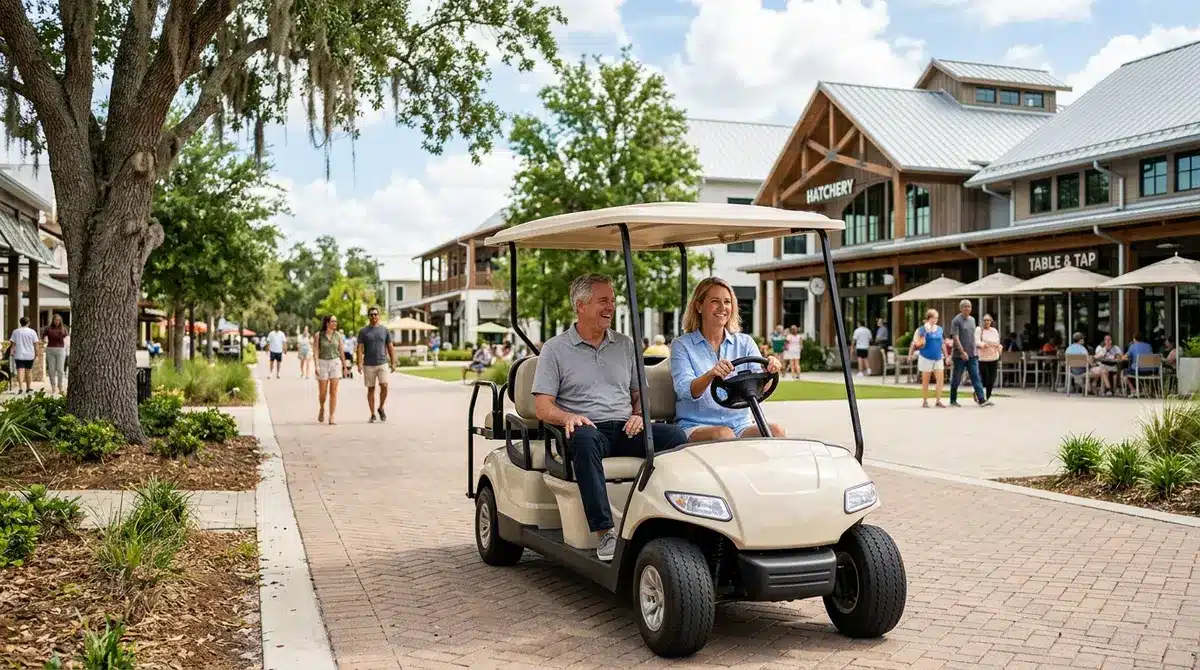
To counter this isolation, developers have rapidly expanded internal commercial infrastructure. The Crescent B Commons shopping center, anchored by a Publix supermarket, provides essential daily conveniences. Residents frequently use golf carts to navigate the miles of paved trails connecting neighborhoods to these commercial hubs.
The Evolution of Downtown and Founder’s Square
Founder’s Square serves as the social and commercial heartbeat of the town. In 2026, it features a mix of dining options, a health and wellness center, and collaborative workspaces. The emphasis on walkability and outdoor gathering spaces fosters a tight-knit environment, though those accustomed to the bustling nightlife of a major metropolitan city may find the pastoral quietude an adjustment.
How to Evaluate if This Community is Right for You (Step-by-Step)
Making an informed decision requires looking past the marketing brochures and assessing your personal lifestyle needs. Follow these steps to determine if this environment aligns with your goals:
- Calculate Total Monthly Carrying Costs: Request a comprehensive breakdown of property taxes, HOA dues, and CDD fees for the specific lot you are considering. Do not rely solely on the base mortgage calculation.
- Test the Commute: Drive from the community entrance to your workplace, preferred medical facilities, and favorite leisure spots during peak traffic hours to gauge the true travel time.
- Assess Floor Plans for Modern Living: Many 2026 architectural designs focus on adaptability. Consider utilizing a flex room for a home office, given the rise in remote work, which pairs perfectly with the town’s gigabit fiber-optic internet.
- Review the Social Calendar: Visit during one of the annual seafood festivals or a Friday night concert at Founder’s Square to experience the community culture firsthand.
- Consult Insurance Brokers: Obtain preliminary quotes for homeowners insurance. You will likely find favorable rates due to the stringent wind-mitigation building codes and elevated topography.
The Social Fabric: Is It Too Engineered?
Because the town was designed with such specific intentions regarding sustainability and community interaction, some outsiders have questioned the uniformity of the lifestyle. Online searches occasionally reveal queries about rumors of a cult-like atmosphere. The reality is far more mundane: it is simply a highly organized, master-planned community that attracts like-minded individuals who prioritize environmental sustainability, safety, and neighborly engagement.
The demographic makeup has shifted significantly. Initially attracting primarily retirees, the 2026 population growth trends show a massive influx of young families and remote tech workers, drawn by the on-site neighborhood schools and expansive parks. This diversification has enriched the social fabric, making it a vibrant, multi-generational hometown.
Real Estate Market Trends in 2026
The real estate market here has matured. As of 2026, the median home price hovers around $550,000, reflecting a premium over older, non-resilient homes in surrounding counties. This premium is justified by the embedded technology, energy efficiency, and lower long-term maintenance costs.
Michael Torres, a prominent Florida Real Estate Analyst, observes: “Properties in climate-resilient communities are outperforming the broader Florida market. Buyers are willing to pay a 10% to 15% premium upfront to avoid the crippling insurance hikes and storm anxieties plaguing coastal properties.”
Inventory ranges from attached villas to sprawling custom estates. Builders have standardized features like impact-resistant glass, advanced spray-foam insulation, and smart-home ecosystems. The architectural aesthetic remains deeply rooted in Florida vernacular, featuring deep front porches and metal roofs that encourage outdoor living.

Frequently Asked Questions
Do residents of Babcock Ranch pay for electricity?
Yes. While the town is powered by a massive solar field, the energy goes into the general FPL grid. Residents receive standard utility bills, though their homes are highly energy-efficient, often resulting in lower overall consumption.
What happens to the solar panels during a hurricane?
The photovoltaic array is engineered to withstand Category 5 wind loads. During major storms, the panels automatically lock into a defensive, aerodynamic position to minimize wind resistance and prevent structural failure.
Are the CDD fees permanent?
CDD fees consist of two parts: a bond repayment for initial infrastructure (which typically lasts 20 to 30 years) and an ongoing operations and maintenance (O&M) assessment. While the bond portion eventually drops off, the O&M portion remains indefinitely.
Is the community at risk of flooding?
The town is built 30 feet above sea level and utilizes an advanced, interconnected system of lakes and wetlands to manage stormwater. It is situated entirely outside of FEMA’s Special Flood Hazard Areas.
How far is the nearest hospital?
While there are on-site health and wellness clinics for routine care, the nearest major hospitals (such as Lee Memorial or Gulf Coast Medical Center) are located in Fort Myers, requiring a 30-to-40-minute drive.
Can I use a golf cart everywhere in the community?
Yes, the town is designed to be highly golf-cart friendly. There are dedicated paths and designated parking areas at all commercial centers, schools, and parks, making it the preferred mode of internal transportation.
Conclusion
The truth about this pioneering Florida town is that it represents a paradigm shift in how communities can be developed in the face of climate uncertainty. By prioritizing robust engineering, renewable energy, and community integration, it offers a secure, high-quality lifestyle. However, prospective buyers must enter the market with their eyes wide open regarding the total cost of ownership, including CDD fees, and the realities of living in a developing, somewhat isolated geographic location.
If you value peace of mind during hurricane season, a strong sense of community, and modern, energy-efficient home designs, the trade-offs are likely well worth the investment. Ready to explore your options in America’s first solar-powered town? Contact us today to speak with our local real estate experts and schedule a personalized tour of the community.